
By Hannah Saunders
On May 4, Seattle Mayor Katie Wilson, whom some voters have nicknamed “Shady Katie,” and “Shady Wilson” for backpedaling on campaign promises, announced Seattle’s Artificial Intelligence Vision, which is a gross expansion in AI. City employees were just granted the option to utilize Microsoft Copilot chat, but the cloud server it uses to store data is the same one Israeli Occupation Forces (IOF) use for carrying out its genocide against Palestinians.
Mayor Wilson said Seattle is already making waves in the AI industry, with the region being home to more than 400 AI companies and more than 200 AI startups. She wants Seattle to become “the best place in the world for the development of responsible AI tools that enhance human flourishing and serve the public good,” she said. Seattle’s policies and tech innovation make it a global leader, and she enjoys visualizing ways it can advance scientific research, and open up new opportunities for businesses and residents.
“In consultation with workers, businesses, environmental groups, privacy advocates, and community organizations, and my colleagues on City Council, we can continue to grow our AI ecosystem while also living up to our progressive values,” she said. “History shows that the social and economic impacts of new technologies are profoundly shaped by our policy choices.”
The Seattle AI Vision tackles impacts on workers, embraces safety and technology developments, and puts in anti-bias protection measures, she claimed. Mayor Wilson added that the city will emphasize the voices of workers and community members in regards to the long-term growth of AI.
“We will also work with AI innovators from across the nation in government, academia, workforce, and more to discuss latest best practices around addressing real and potential AI impacts, including in workforce displacement and skills-building, cognitive decline, and mental health,” she noted.
“Keeping up with the times” vs real-life consequences
In her blog post, Mayor Wilson argued that the city has a responsibility to keep up with the changing technological landscape, and said the person who steps into the Seattle Information and Technology Department’s new City AI Officer role will be in charge of ethically implementing AI, among other things.
“I understand that some people may wonder why the City would allow any AI use at all. I don’t believe that simply burying our heads in the sand will prevent these tools from being used, nor will it allow us to continue to be world-class innovators in both technology and public policy,” Mayor Wilson said. “And it will also not help us to ensure compliance with critical privacy, transparency, and records protections.”
Mayor Wilson said she is eager to utilize AI to improve people’s quality of life, but at what cost?
Just this year, Amazon slashed 14,000 jobs because of AI, and Oracle laid off 491 employees in Washington to grow its AI infrastructure. The Seattle Times also reported in 2025 that Microsoft cut over 15,000 jobs so it could fund AI growth at the company.
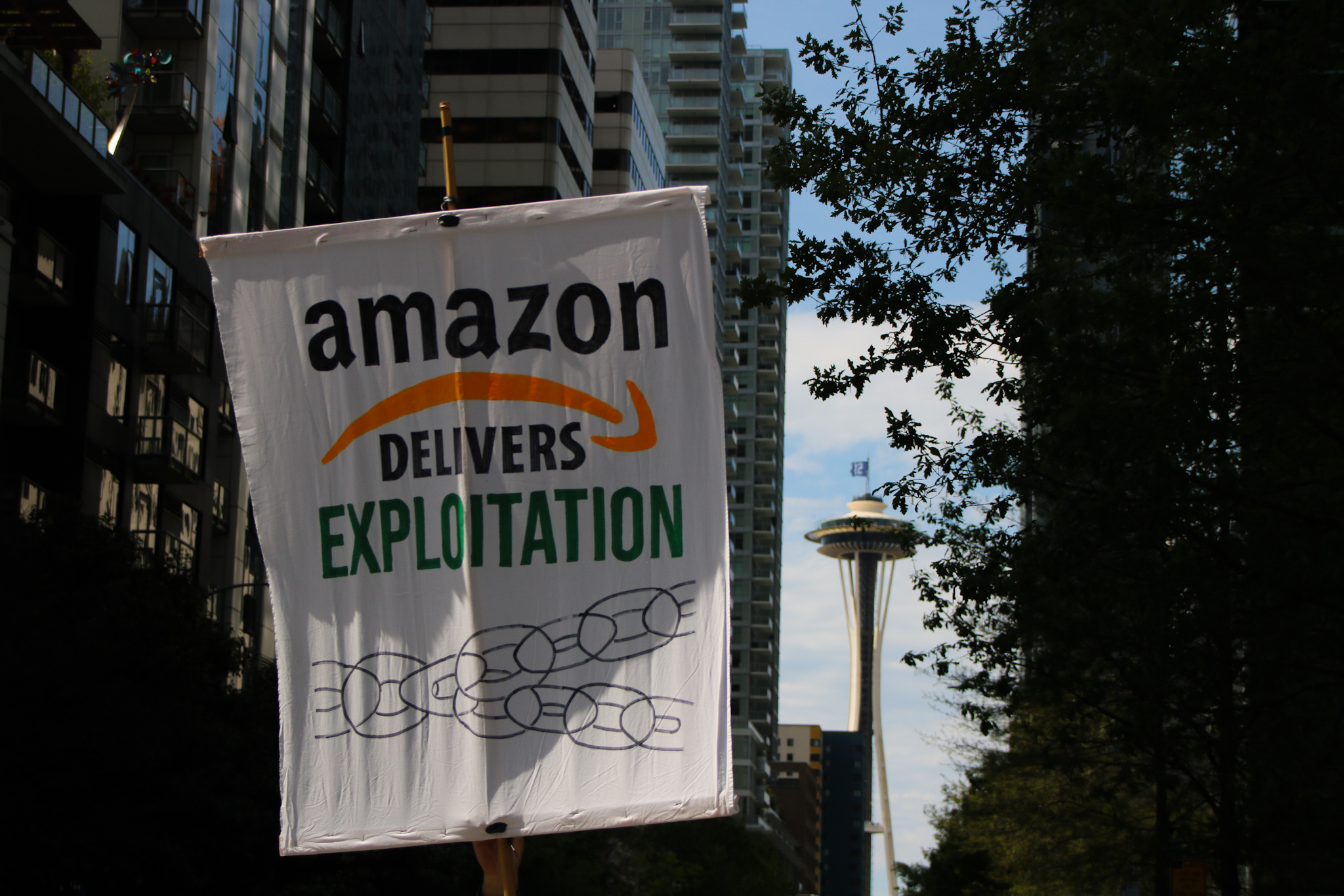
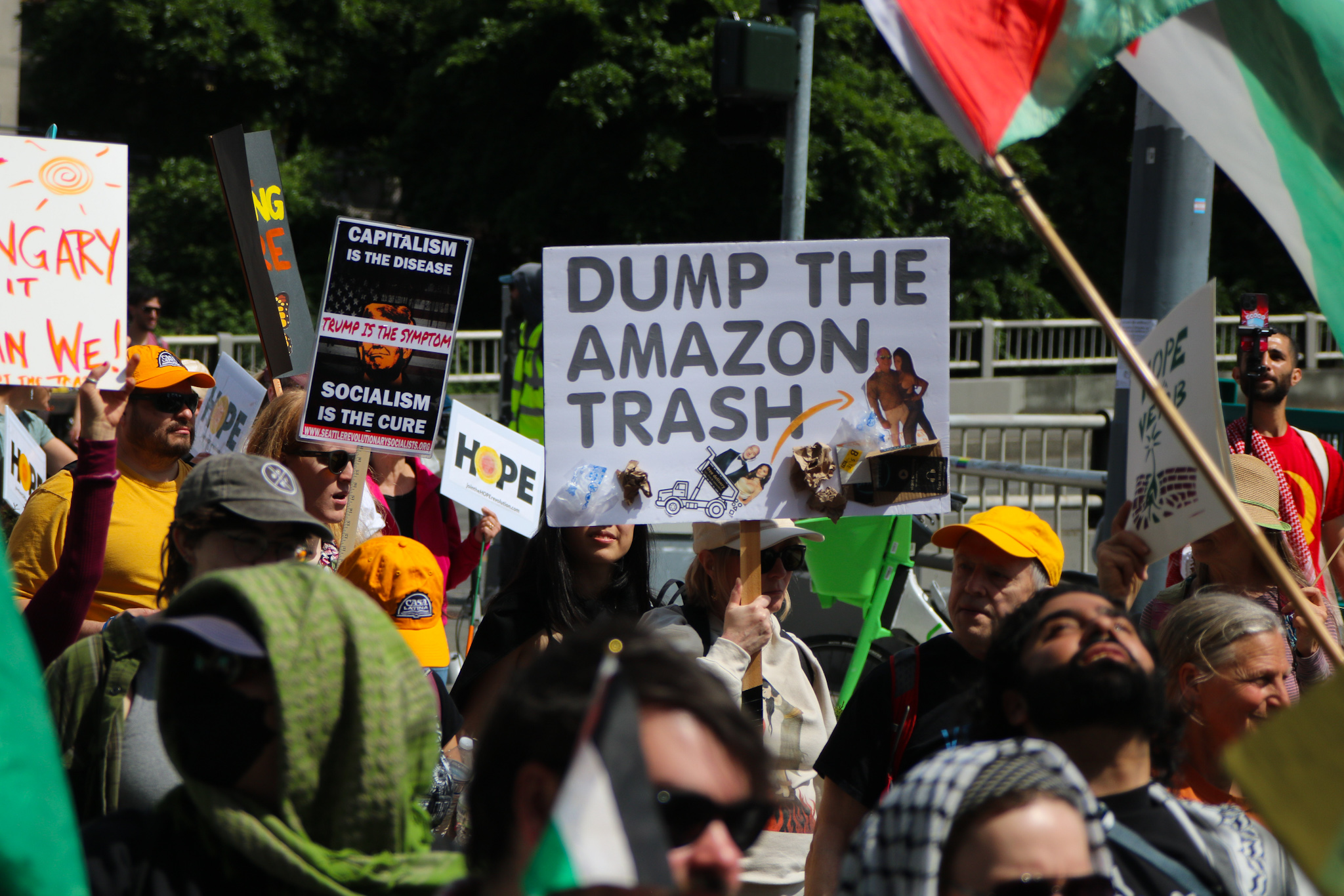
As more companies move away from human talent and towards AI and data centers, talented workers who are dedicated to their crafts are left without work and will likely have to retrain for a new pathway. These job losses are happening in an economy that pinches every penny from residents, and occupations most at-risk for AI replacement are coders, graphic designers, content writers, and customer service representatives. AI can help simplify mundane tasks in order to boost productivity in other areas, and some have argued that AI will create more jobs, but Washington’s unemployment rate has risen for its fourth consecutive month.
Humans have trained AI, which means AI has the potential to push biases or misinformation. It also lacks contextual understanding and sophisticated analysis. When humans rely more on AI, creativity, critical thinking, and analytical skills drop. It puts artists and creators at risk for copyright infringement and theft, and helps generate basic and low-quality content known as “slop.” AI is not a necessity, and its risks to society, mental health, and the environment are more important than its convenience.
The environmental dangers and Seattle’s data centers
Mayor Wilson briefly noted how AI data centers have “huge impacts” on the environment, health, affordability, and equity. Data centers house and power AI, and they produce waste that oftentimes is filled with hazardous materials, like lead and mercury, according to the United Nations Environmental Programme. While about 25% of the globe lacks access to clean water and sanitation, data centers guzzle enormous amounts of water during construction and to keep equipment cool.
“Data center operators have frequently chosen sites in states like Arizona, California, Virginia, and Texas to benefit from low land costs, tax incentives, and renewable energy access. However, these regions often face water scarcity and competing demands for limited natural resources,” according to Nixon Peabody, a global law firm.
Some facilities can use millions of gallons of water each day, which can deplete clean water in areas already struggling with access, and a large-scale data center can easily use 300,000 gallons per day. Such high use destroys local ecosystems because streams and rivers will never see a return in the water extracted for the data centers.
While Washington is known for being very wet and rainy, the Departments of Health and Ecology said the entire state is under a drought emergency this year— for the fourth consecutive year. And four companies approached Seattle City Light recently with the desire to build five large-scale data centers, with Sabey Data Centers eventually withdrawing its plans, according to the Seattle Times.
Thirty small data centers are already located in Seattle, but after the Seattle Times article dropped, the Seattle City Council received thousands of emails from concerned residents. The combined maximum demand of the data centers is 369 megawatts, which is enough to power 300,000 homes.
On April 30, Councilmembers Debora Juarez, Eddie Lin, and Joy Hollingsworth announced that they would introduce an emergency moratorium for new data centers in Seattle, and that the bill will include several impact studies regarding the city’s infrastructure, water usage, utility rates, land use, jobs, and public health. The following day, Mayor Wilson said the City will issue a report that evaluates the economic effects, and said she will ensure that residents and businesses will not have increased utility costs as a result.
How the IOF uses Microsoft Azure to carry out its genocide

No Azure for Apartheid is a movement of Microsoft workers demanding that the company end all complicity in the Israeli Apartheid and genocide against Palestinians. The group has previously stated that Microsoft offers up its technology to the IOF, including AI, which Microsoft knows is deployed for war crimes, genocide, and human rights violations.
“Microsoft provides the Israeli military with Azure cloud, AI, and storage services, which are crucial in automating Israel’s atrocity crimes in Gaza. The Israeli military uses AI and cloud technologies, including from “civilian clouds” like Azure, to construct a “weapons platform” and a “mass assassination factory” that automate and accelerate Israel’s crimes through systems such a as Gospel, Lavender, and Where’s Daddy,” No Azure for Apartheid said.
Microsoft Azure has also been used by the IOF to store, translate, transcribe, and search through the text messages of Palestinians as a way of mass surveillance. The cloud also hosts software for IOF training, according to No Azure for Apartheid.
The City of Seattle has used Microsoft Azure for years to store datasets, and Seattle City Light uses the LoadSEER software that is hosted by Azure. LoadSEER is being used by the department to make data-driven decisions, forecasting, and grid modernization and planning, according to Geek Wire. The City’s Microsoft Copilot chat is integrated into Microsoft Cloud, which specifically uses Azure for privacy and security.
“Over the next several years, I will add to our existing technology risk assessments by developing AI framework auditing process modeled after work in the European Union, aimed at developing strong labor and other standards across pre-procurement, procurement, and usage of Generative AI products for City work,” Mayor Wilson noted. “My vision is about catalyzing a vibrant local ecosystem for the development of responsible AI tools.”
We need your help to keep reporting! Become a monthly donor now on our website or at Ko-Fi.com/ThroughtheStatic or Venmo @ Saundershannah. Thanks for your support!


Leave a comment