by Gray Trammel
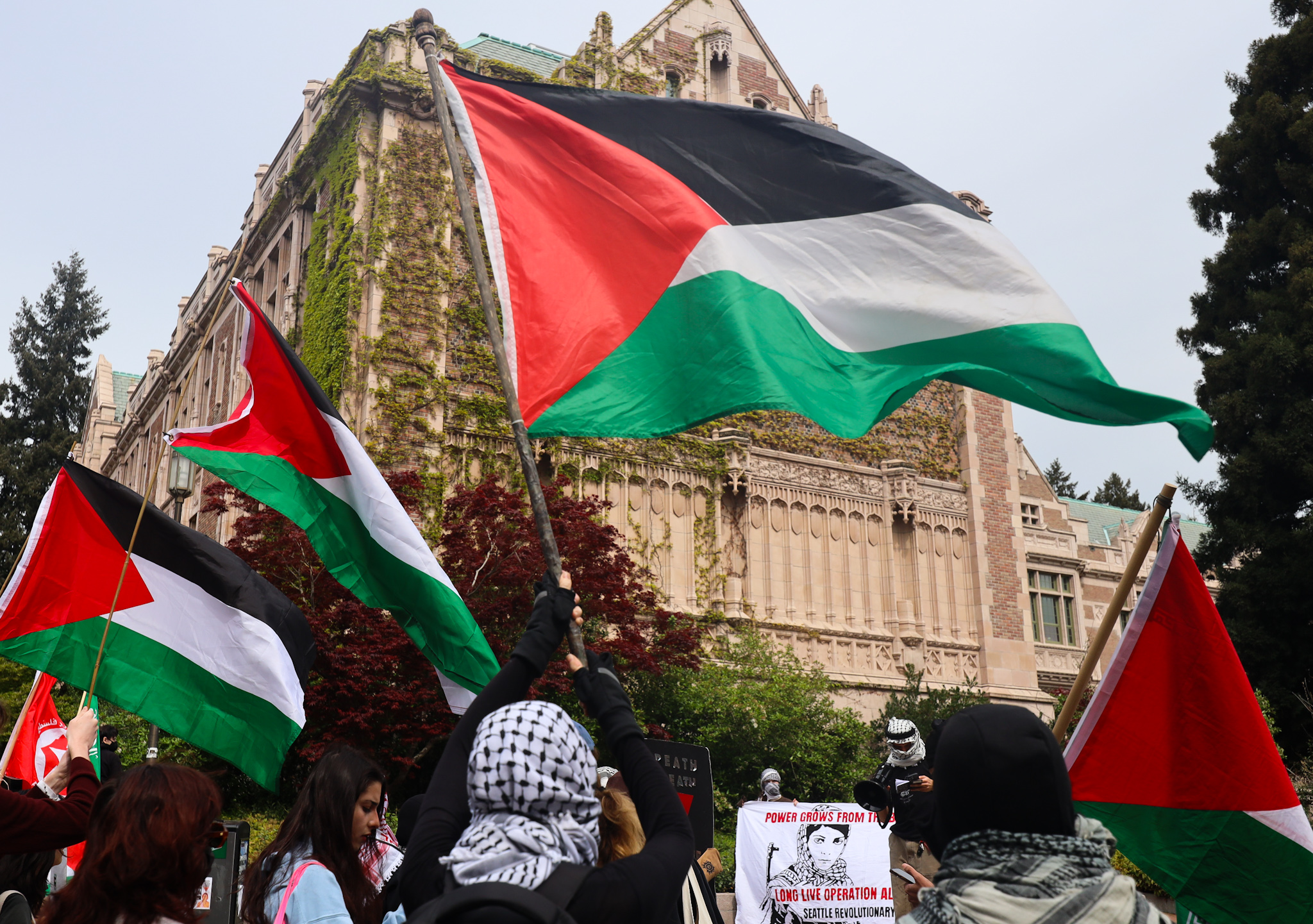
The University of Washington (UW) has delayed proposed changes to its Student Conduct Code after student organizers raised concerns that the revisions could give the institution the authority to discipline students involved in protests. The recommendations would revise UW’s definitions of disruption, obstruction, failure to comply, and unauthorized access. For Super UW, a pro-Palestinian student group, the changes raise a question about how far a university can go in regulating protests before its rules begin to discourage students from participating.
“The changes in the [Student Conduct Code] are intended to allow for collective punishment, where even the attendance of a protest, or the organization of a protest makes you individually responsible for all actions that occur at that protest,” Super UW told Through The Static.
On September 3, UW rejected that characterization, stating “The Student Conduct Code does not prohibit speech or other expressive activities that are protected by the First Amendment, and these definitions will be applied consistently regardless of what views– if any– were being expressed when the misconduct took place.”
An amendment in the newly proposed rules relating to unauthorized access, presence, or use of property highlights how “Students and student organizations who are present in a university building or on university premises without authorization may be found in violation of the code for prohibited conduct that occurs even if they did not directly participate in the conduct if: (a) A university official or law enforcement officer issues a lawful directive to leave the building or premises; and (b) The student(s) choose to remain.”
UW President Robert Jones announced plans for the review last November, and hired law firm Husch Blackwell to assist with the analysis. UW said the review was intended to examine whether the code remained effective in a “modern university environment,” and to improve transparency and fairness. University leaders, staff, faculty, and students participated in the nine-month review process, which UW said incorporated feedback from those groups. Additional feedback for revisions came from peer university practices, and state and federal legal requirements.
The proposal’s identity-concealment provision has also become a point of concern; if enacted, it would allow the school to consider if a student concealed their identity to evade identification while engaging in prohibited conduct when determining sanctions. In the September 3 update, UW stated that if a person has already been found responsible for prohibited conduct, concealing their identity to evade identification while engaging in that conduct may be considered when determining a sanction.
“This is also an attack on privacy and health, punishing those who mask to avoid getting doxxed by right-wing actors, to prevent the spread of sickness and disease, or to avoid being identified by the increasing number of AI-powered surveillance cameras in Seattle,” Super UW noted.
At a March 22 town hall moderated by far-right Seattle radio host and Zionist Ari Hoffman, President Jones emphasized how the university’s existing conduct code “was not written for this moment in time,” and that the May 2025 occupation of the Interdisciplinary Engineering Building was “one of the reasons I was very interested in changing that code.” That May, about 30 protesters occupied the building to demand that the university cut ties with Boeing. Police swept the area that night, and 33 people were later charged with first-degree criminal trespass.
Super UW said the proposed changes to the Student Conduct Code were intended to allow “collective punishment,” and described them as being connected to the university’s harsh response to pro-Palestinian protesters.
“These changes that UW admin is making are an explicit collaboration with Trump’s federal government to repress pro-Palestine, pro-migrant, and any progressive force that threatens the university’s profit margins or funding,” Super UW said.
These potential changes come as universities across the country are facing pressure from the federal government over their responses to pro-Palestinian organizing. On Sept. 3, the House passed the “Protect Economic and Academic Freedom Act,” which was introduced in 2025 by a vote of 237-169, which would block federal funding for universities that participate in boycotts of Israel; The bill is now in the Senate. Washington Rep. Adam Smith was among the 27 House members that did not vote, citing an absence, and Reps. Kim Schrier and Marie Gluesenkamp Perez both voted in favor of the bill.
The UW code was first scheduled for permanent adoption Sept. 9, with an effective date of Oct. 12. But now, those proposed changes are being delayed to allow additional feedback from the UW community, with UW stating it would seek input from student bodies across its three campuses. President Jones asked the Faculty Senate to provide its feedback by Dec. 10.
For Super UW, this fight is ultimately about who gets to decide what legitimate protest looks like on campus, and whether rules intended to address misconduct could make students think twice before taking action.
TtS reached out to UW for comment. They said “This review was not in response to — nor was it prompted by — any individual incident.”
TtS is fully community-funded by readers like you! Help us keep reporting local, antifascist news by becoming a monthly or one-time donor now at ThroughtheStatic.org/donate.


Leave a Reply