By Gray Trammel
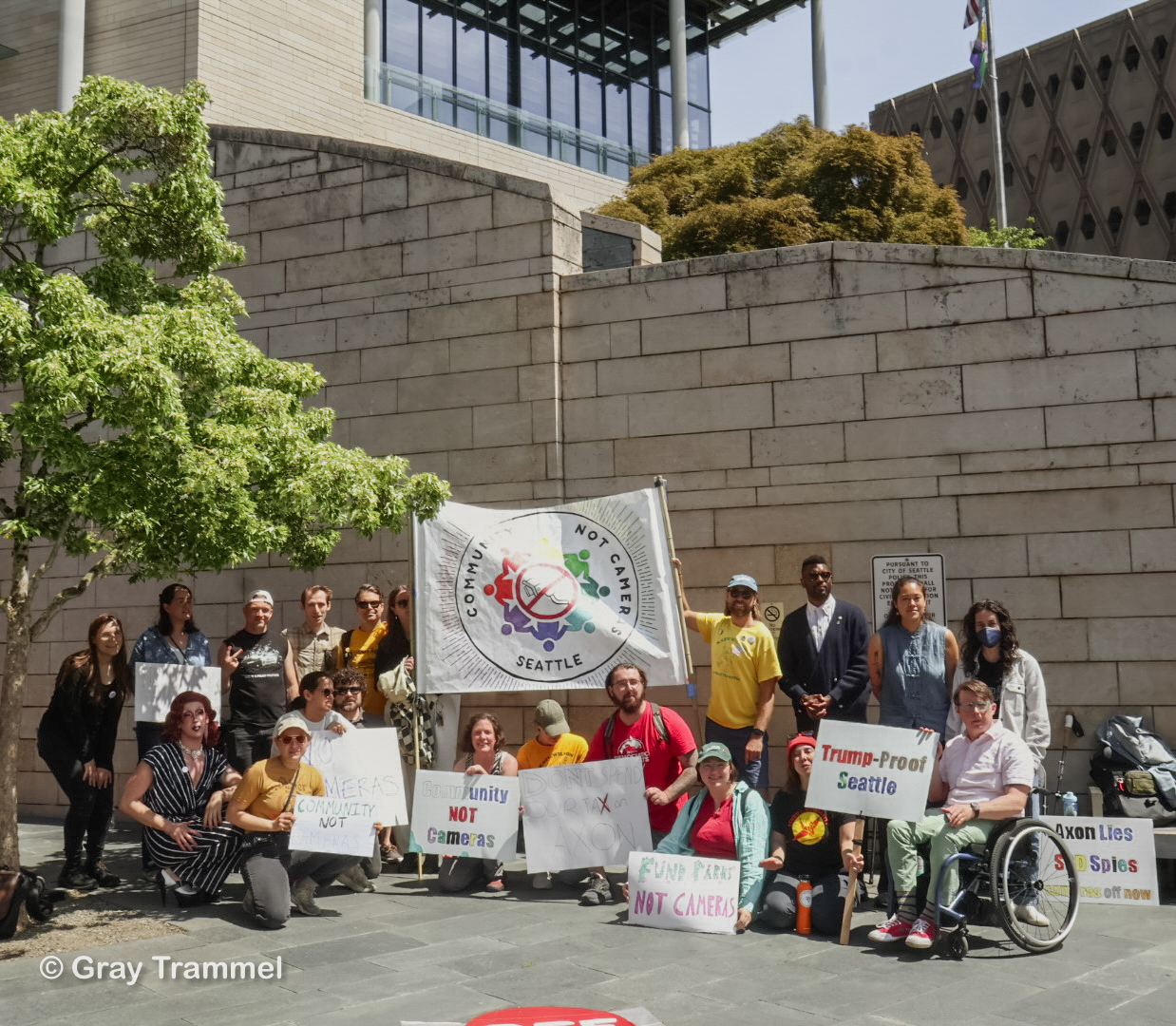
Seattle Mayor Katie Wilson announced on July 7 that the Stadium District CCTV cameras installed for the 2026 FIFA World Cup have been turned off, and will remain deactivated while the city completes an independent privacy and data-governance audit. Members of the Community Not Cameras rallied at Seattle City Hall Plaza that afternoon, where speakers argued that deactivating the Stadium District cameras is only the first step in changing Seattle’s surveillance policies.
Phil Mocek, who is computer software engineer, told attendees that surveillance cameras still remain active in other parts of Seattle.
“We did look closer and recognized that the cameras are still on downtown, at the CID and at Aurora,” Mocek said. “I want rules for these as long as they are up.”
Seattle City Council member Rink put a statement out that was read at the rally, which explained how the Office of Civil Rights and the Seattle Community Police Commission have stated the negative impacts of these technologies in a quote: “CCTV and RTCC technologies are not neutral instruments as they carry direct consequences for equal protection, privacy and freedoms of speech and association.”

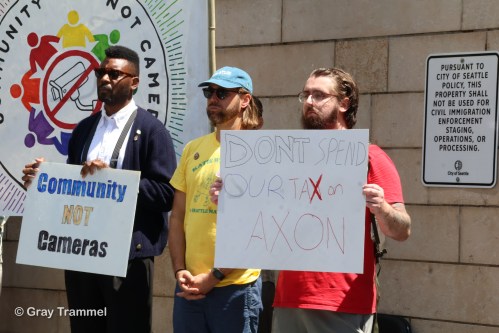



Activist and cyber security expert, AJ Randall, also took to the microphone to highlight the misuse of CCTV surveillance cameras and SPD’s harmful behavior. He worked at Nordstrom as a cyber security engineer for six years, with a focus on the implementation of Axon’s body cameras. Randall said Axon “does not give a shit about your data privacy or security,” and that Axon is seeking to build the largest unified surveillance network that they can.
“The Police and SPD specifically do not give a shit about your data privacy or security. They care about building their own power. While I was pressing Axon for details about the data handling, the loss prevention manager— who was a cop for 20 years prior to working for Nordstrom— constantly pushed me to rubber stamp the project on behalf of Pete and Eric Nordstrom specifically,” Randall added.
The City of Seattle works with Axon, which collaborates with the Department of Homeland Security (DHS) by providing body-worn video cameras, cloud storage, and others. SPD’s CCTV cameras are connected to the Real Time Crime Center, which stores data for up to five days before allegedly being erased. If footage is called up and connected to an incident, it is then stored on Axon’s evidence.com server. Mayor Wilson has previously said these cameras are not monitored around the clock.
After the rally, a few different supporters attended the Seattle City Council public comment period to continue urging city leaders to permanently remove the surveillance cameras. Ken, who is a candidate member of the American Party of Labor (APL) Puget Sound Division, argued that surveillance cameras do not prevent violent crime.
“These are threats to the public. These are not deterrents to any type of crime,” Ken said. “We know that because Christopher Leahy disabled the camera before he stabbed Juniper Blessing 40 times! Cameras are tools of the surveillance state to stalk and harass the public.”
Camille shared similar concerns, arguing that the cameras should be permanently removed rather than simply deactivated. She called for the expansion of the city’s CARE Department and shifting resources away from SPD because those investments would provide a greater benefit to public safety. The Seattle CARE Department deploys behavioral health professionals to address calls to include welfare checks.
“We know that when turned off they are never really off, and we want them taken down,” Camille said.Before leaving the podium, Camille presented a poster titled “What would you like to see the city fund instead of surveillance.” containing requests from community members. Some of the requests included mental health services for all, CARE teams, restorative justice programming in schools and housing.
Another public commenter, Naomi focused on the financial cost of the city’s surveillance camera program, arguing the money could be better spent on public services. “
These ones in particular are also costing the city $8.8 million a year while we are facing potential cuts to services. That’s ludicrous,” she said.
She also criticized how police use surveillance technology, arguing that officers use camera databases to monitor and track people. Naomi said the technology enables police to stalk members of the public and called on city leaders to permanently remove the cameras rather than simply deactivate them.
While the cameras have been turned off, members of the Community Not Cameras coalition said that they want the cameras uninstalled and permanently removed by the end of the week. Activists stated that the city should invest money in community-based public safety programs such as CARE and mental health support, and never trust AXON or any of the vendors again.
Help us keep independent and antifascist news free for everyone! Become a monthly donor of $5, $7, or $25 now here or Ko-Fi.com/ThroughtheStatic or Venmo @ Saundershannah. Thanks for your support!


Leave a comment