
By Hannah Saunders
After launching a case against Live Nation in 2024, Washington and 32 other states, and D.C., have officially won what is a landmark antitrust lawsuit due to the business’s monopolization of the live entertainment industry. The decision was announced on April 15, and the jury found that Live Nation drastically spiked ticket prices and harmed performers, with the average price of a ticket in 2025 costing about $132, according to Pollstar.
“We’ve argued for years that Ticketmaster owner Live Nation has a monopoly that harms consumers, venues, artists, and competition. Today, a jury agreed with us and has found Live Nation fully liable for its illegal conduct,” Washington Attorney General Nick Brown said. “I am proud of state enforcers across the country who stood firm in rejecting the federal government’s inadequate settlement and pressing forward to win this landmark victory for competition and the rule of law.”
The jury also found that Live Nation illegally laced concert promotion services into venues. This decision comes after a mediocre settlement was presented, where the Department of Justice did not involve states in a meaningful way; plaintiffs agreed to continue the trial. Other attorneys general argued that this proposed settlement lacked accountability for Live Nation and did not do enough to support consumers or reintroduce competition.
Live Nation is the world’s biggest live entertainment and music company that promotes concerts and operates venues, and in 2010, it merged with Ticketmaster, the largest ticket distribution company in the world. After the merger, they began eating up other companies in the entertainment industry to knock out rivals.
The Washington Attorney General’s Office stated that Live Nation locations have long-term contracts with Ticketmaster to block competitors, which in turn has led to higher fees for attendees and limits smaller artists in securing spots. Live Nation’s Washington venues are Woodinville’s Chateau Ste Michelle Winery, the White River Amphitheatre in Auburn, the Gorge Amphitheatre in Gorge, and the Cascades Amphitheatre in Ridgefield.
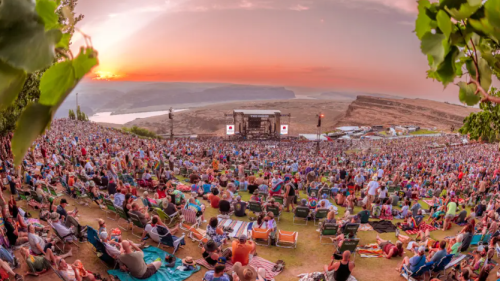
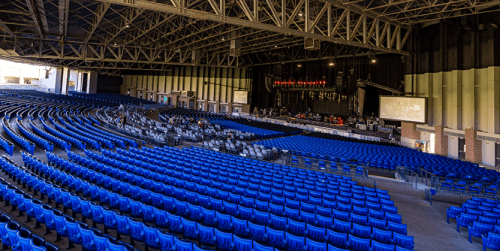
Artists typically don’t pay to reserve a venue, but rather receive a percentage of ticket sales. If they use Live Nation venues, artists are forced into controlled promotions for the event and are required to use Ticketmaster. If artists do not want to do promos with Live Nation, they are shut out from its venues. The monopolization of the live entertainment industry creates higher ticket fees, reducing a smaller artist’s revenue by making it more challenging to grow their audience. Smaller artists also have fewer resources and less influence when it comes to negotiating power for ticket pricing and payments.
Live Nation and Ticketmaster’s power also lies in acquiring equity in the top management firms, rather than direct management. Key companies include Roc Nation Management, Front Line Management Group, and Vector Management. Live Nation represents and manages over 500 artists, including A$AP Rocky, Cardi B, Weezer, and Sabrina Carpenter— who recently came under fire after a performance at Coachella, owned by conservative Christian billionaire Philip Anschutz. The audience was quiet as Carpenter was getting settled on her keyboard, then a fan let out a Zaghrouta. Stunned, Carpenter said she thought she heard a yodel.
“That’s your culture, is yodeling?” Carpenter said.
Her fan explained how it’s a call of celebration, and the pop star said the situation was “weird” and that she didn’t like the sound of the Zaghrouta.
Coachella is organized by Goldenvoice, which is a subsidiary of AEG Presents, a long-time rival of Live Nation. Although the monopoly represents some of the most popular talent currently in the entertainment industry, like Carpenter, more people are coming to terms with the fact that artists and celebrities are far too out of touch with reality, as some of Carpenter’s fans turned their backs on her after the Zaghrouta incident.
As people in America are becoming increasingly frustrated by massive corporations squeezing their earnings, the landmark case will now enter a new phase; the court will decide on what the defendants will be slapped with.
Live Nation issued a statement on April 15 about the verdict, and stated that this isn’t the end.
“Live Nation will soon renew its motion for judgment as a matter of law, which the Court deferred until after the jury returned its verdict. That motion addresses all liability theories. The Court previously noted that Live Nation’s motion raises serious issues,” it said. “There is also a pending motion to strike the damages testimony on which the jury’s award was based. The Court deferred ruling on that motion as well, while noting significant concerns with the damages expert’s analysis.”
The company reminded the public that it “can and will appeal any unfavorable rulings on these motions.”
Other states involved include Arizona, California, Colorado, Connecticut, Florida, Illinois Indiana, Kansas, Louisiana, Maryland, Massachusetts, Michigan, Minnesota, Nevada, New Hampshire, New Jersey, New Mexico, New York, North Carolina, Ohio, Oregon, Pennsylvania, Rhode Island, South Carolina, Tennessee, Texas, Utah, Vermont, Virginia, West Virginia, Wisconsin, and Wyoming.
Help us keep reporting! Become a monthly donor of $5, $7, or $25 below or at Ko-Fi.com/ThroughtheStatic, or Venmo @SaundersHannah. Thanks for your support!

Leave a Reply