
By Hannah Saunders
TtS previously reported on ICE’s info leak in Minneapolis on January 14, which came after protesters smashed their car windows and rummaged through documents and other items. Earlier that evening, ICE shot a Venezuelan man in the leg— just one week after agent Jonathan Ross murdered Renee Nicole Good in her car next to her wife and dog.
Minneapolis Police Chief Brian O’Hara said on January 14 that the victim was driving, had a vehicular accident, then ran towards a house but “got into a struggle” with federal agents. He noted a broomstick and shovel being on scene, and that at least one person “may have assaulted federal law enforcement.” O’Hara added that he requested the Minnesota Bureau of Criminal Apprehension to look into the shooting.
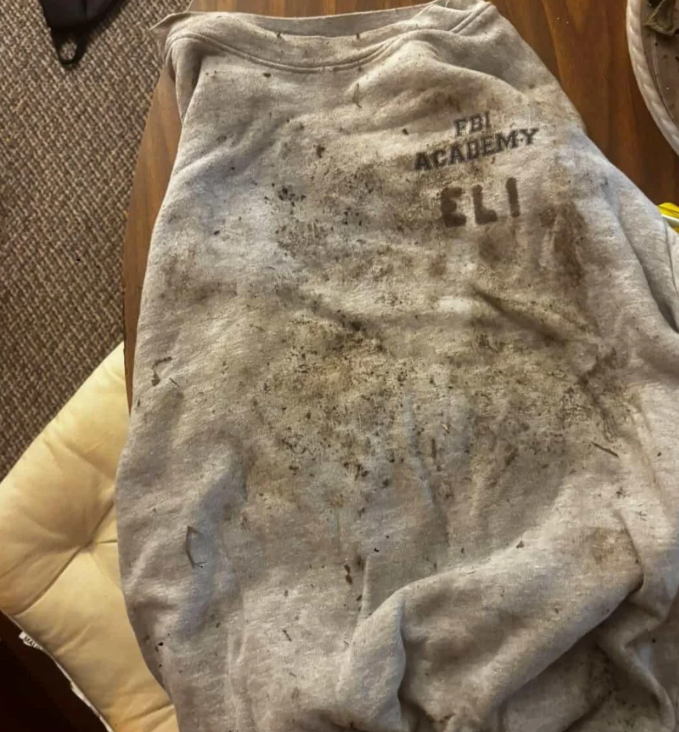
Protests erupted and as the night went on, several expressed their anger towards ICE by vandalizing their vehicles and exploring the interior. TtS obtained multiple photos, including a light grey FBI Academy sweatshirt with the name “Eli” written on it, and mail addressed to the FBI laboratory’s federal DNA Database Unit, located at 2501 Investigation Pkwy, Quantico, VA 22134-9902.
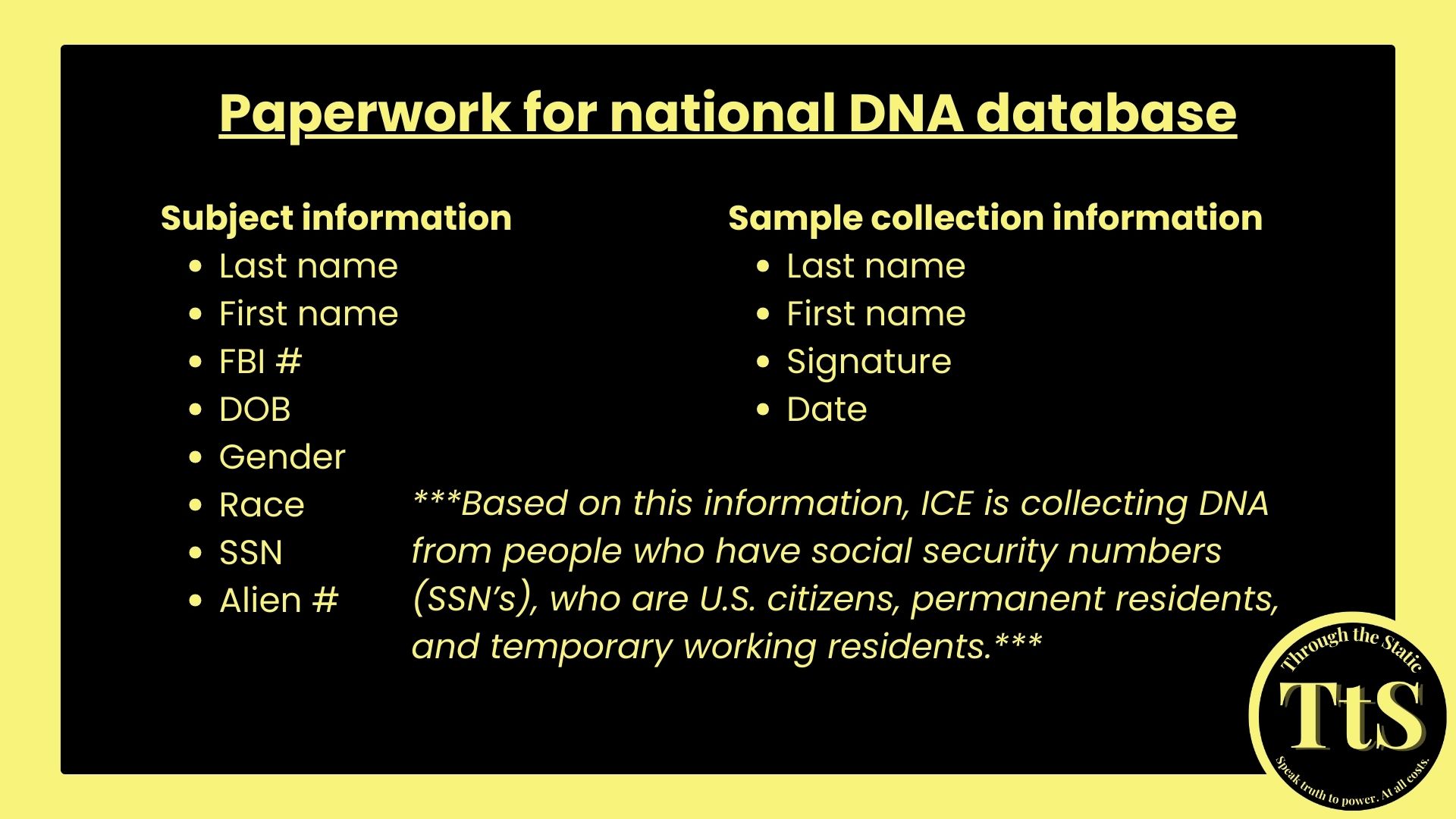
Along with it is a smaller envelope for DNA samples, which states, “Insert collector with name label at the bottom of the envelope and collection tip towards the top flap.” ICE has been collecting DNA from immigrants they kidnap to insert into the FBI’s criminal database.
Portlanders who have been protesting outside of the city’s ICE facility have reported being targeted and snatched up by ICE, arrested and forced to undergo saliva swabs.
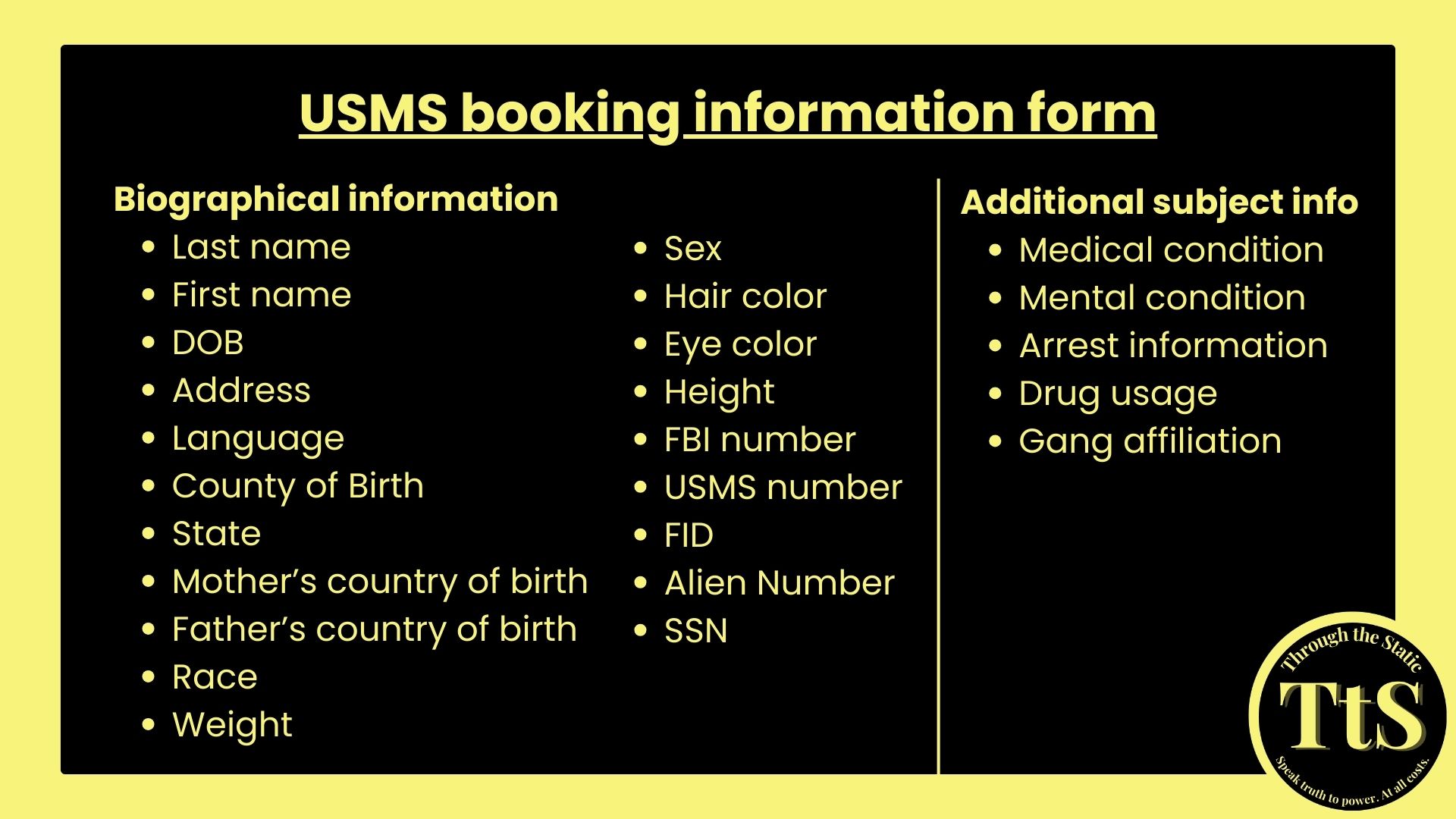
Mercado Media was live-streaming in Minneapolis on January 14, and filmed a person picking up an information packet containing various operational information. TtS examined the documents captured in the video and here’s what we’ve found:
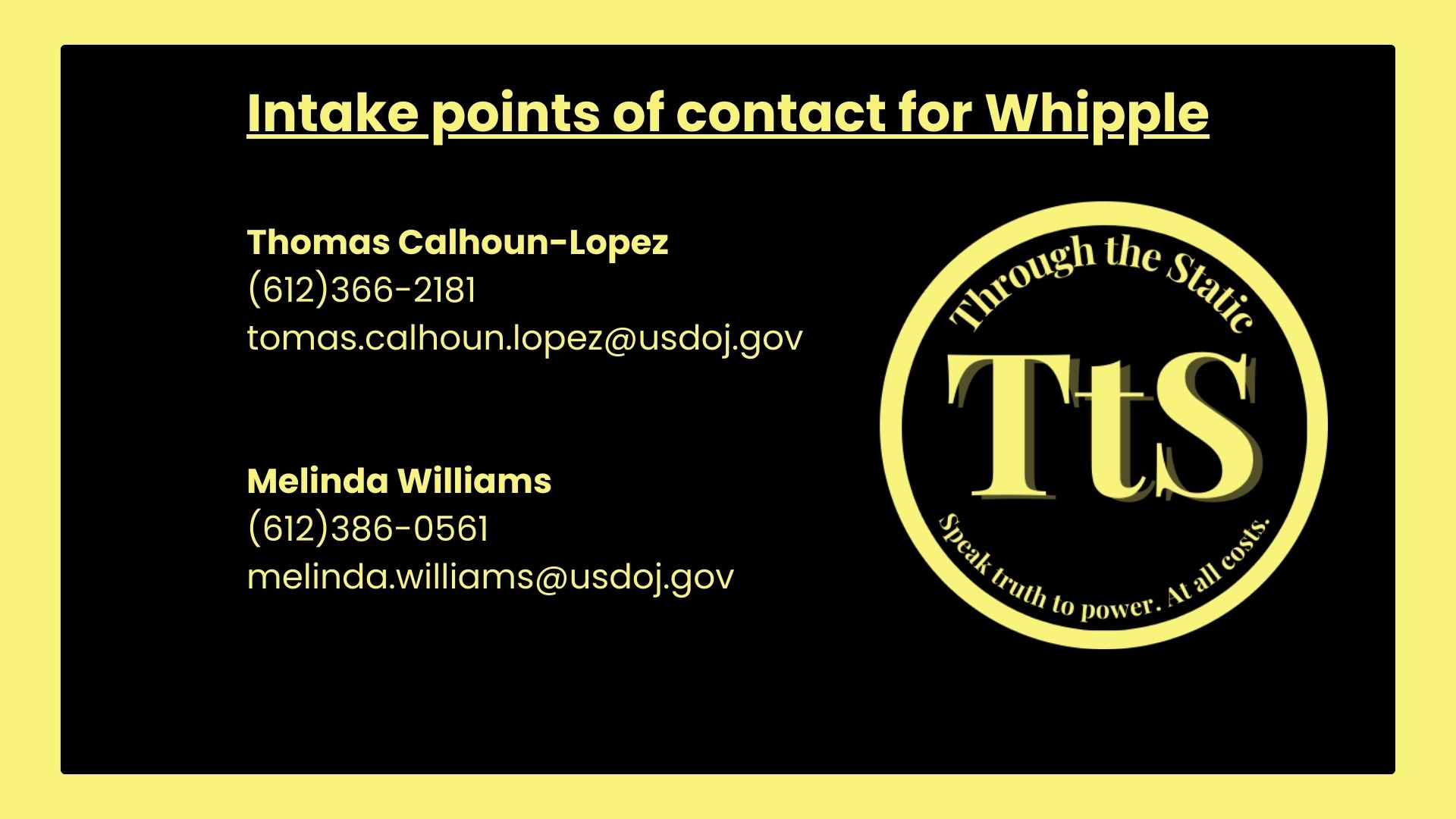
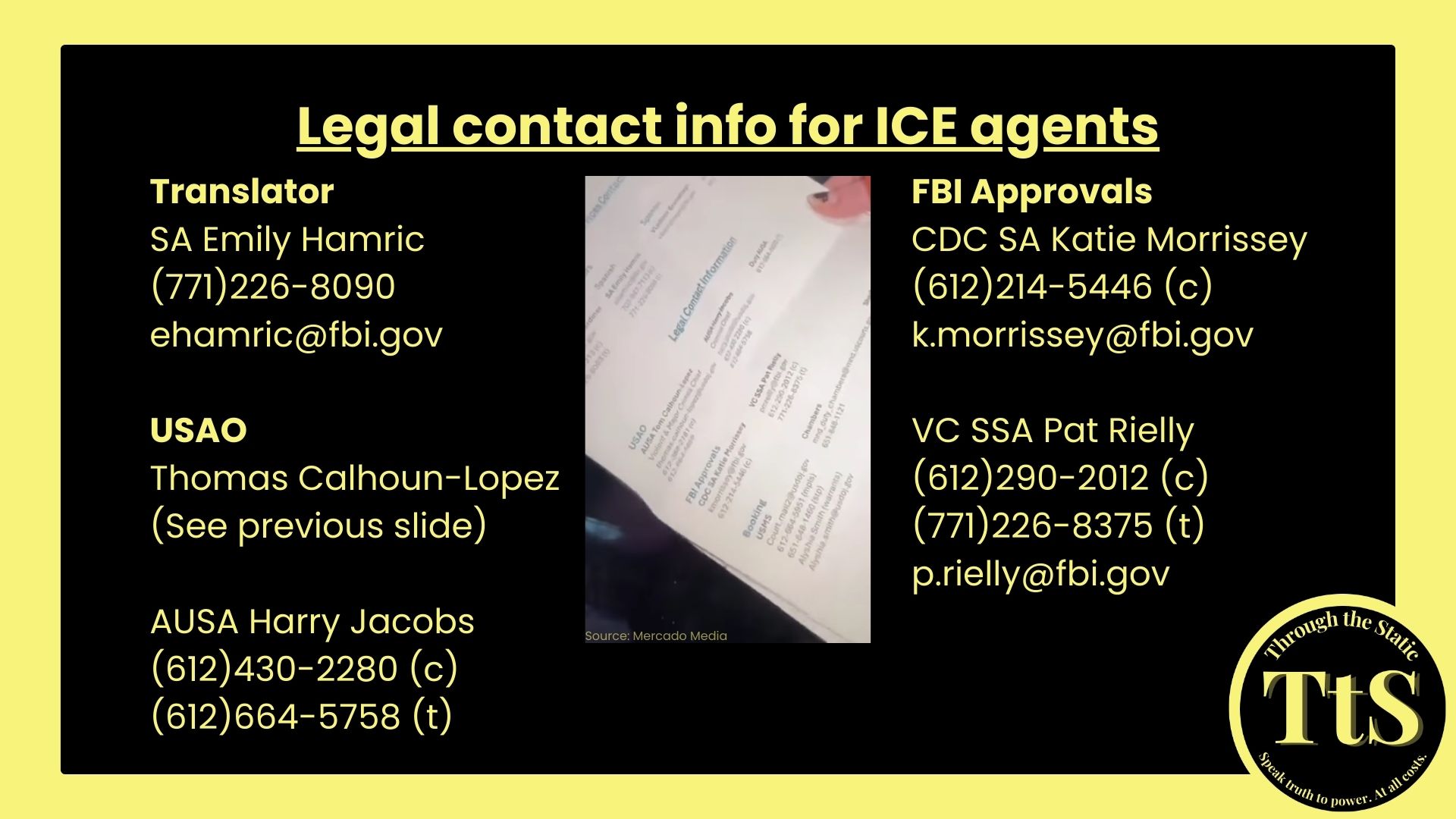
ICE agents were provided a packet that included intake points of contact for the Whipple Building, as well as step-by-step instructions on how to enter the facility, and legal contact information.
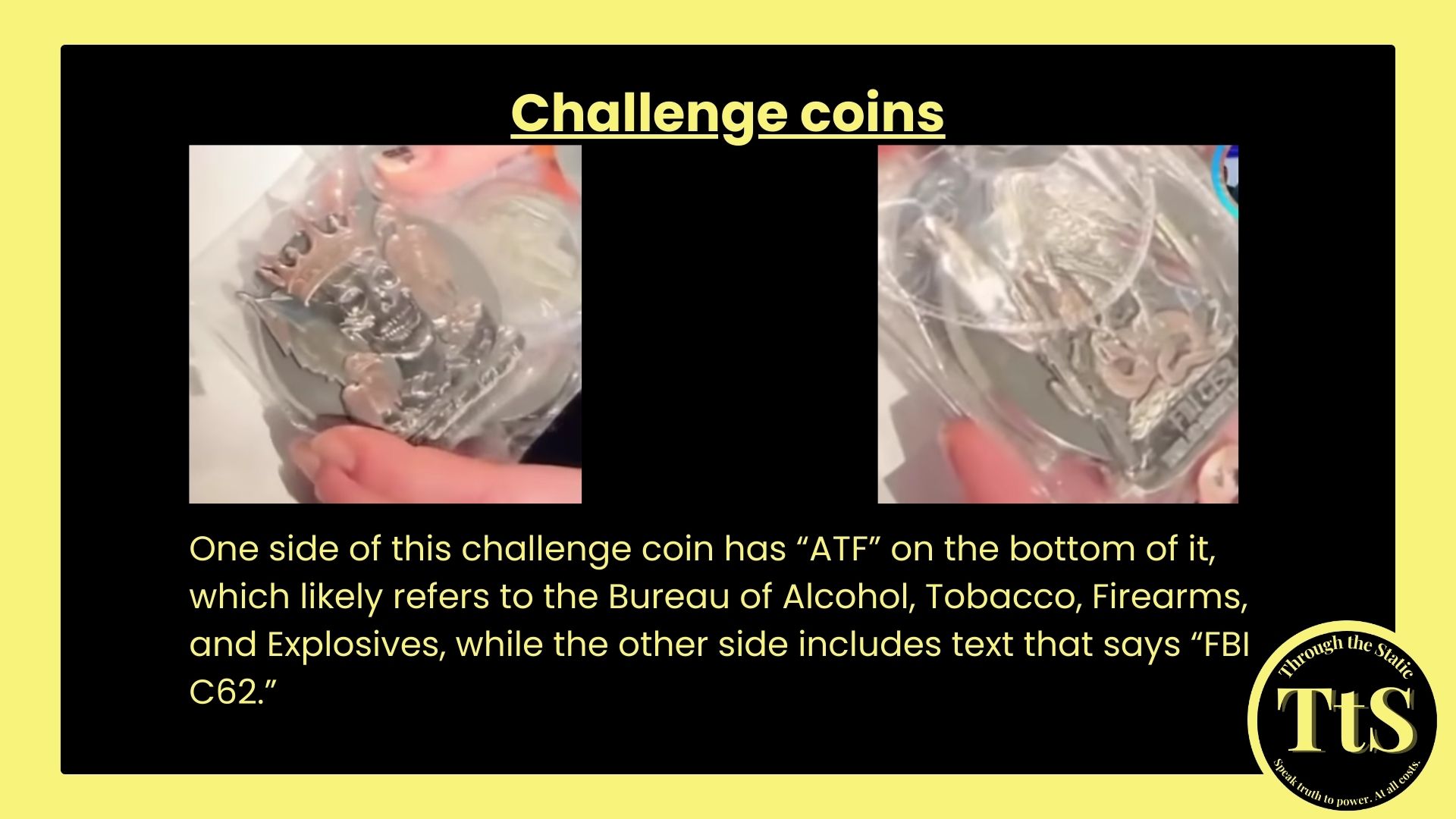
“Challenge coins are small medallions that represent an achievement, membership, or affiliation to a specific group. In the military and veteran community, they often symbolize a special event or mission, anniversary, meeting with a leader, or affiliation with a unit.”
-Wounded Warrior Project
Follow us on social media for more updates!


 Through the Static
Leave a comment