By Hannah Saunders
Trump’s executive order, “Ending Crime and Disorder on America’s Streets,” signed on July 24, will criminalize homelessness and forcibly institutionalize unhoused people living with serious mental illness (SMI) and substance use disorder (SUD). It will work to end housing-first, harm reduction, and safe consumption site programs—all of which are lifesaving. Queer youth and People of Color are likely to be the most targeted, as they face disproportionate rates of homelessness.
“Shifting homeless individuals into long-term institutional settings for humane treatment through the appropriate use of civil commitment will restore public order,” states the executive order.
The executive order also mentions that the Attorney General (Pam Bondi) will guarantee that the Emergency Federal Law Enforcement Assistance program will have enough funding for sweeps of encampments in areas that lack resources and where public safety is a concern. The AG will also “assess Federal resources to determine whether they may be directed toward ensuring, to the extent permitted by law, that detainees with serious mental illness are not released into the public because of a lack of forensic bed capacity at appropriate local, State, and Federal jails or hospitals,” according to the order.
The vagueness of this order allows for greater interpretation, leading to complications for those it directly impacts. One part of the order states that unhoused people with SMI and SUD who are a public or personal threat, or who cannot care for themselves, will be placed in “appropriate facilities for appropriate periods of time,” yet neglects to define who determines those “periods of time” or what criteria they will use to determine those they seek to lock up.
SUD prevention, treatment, and recovery grants from the Substance Abuse and Mental Health Services Administration are prohibited from funding harm reduction and safe consumption initiatives, with the order claiming that they merely “facilitate illegal drug use.” Safe consumption sites allow people to walk into a center with trained staff members who monitor their substance intake and reactions, preventing overdoses that occur in other settings. They also provide harm reduction supplies, including new syringes and safer smoking kits, reducing the spread of HIV and Hepatitis C that occurs through syringe-sharing.
The National Homelessness Law Center (NHLC) issued a statement that highlights how the order expands law enforcement activity, provides funding for areas that treat homelessness as a crime, and ends housing-first solutions. It also noted how forced treatment is ineffective, unethical, and illegal, suggesting that people need access to housing and healthcare.
“Combined with MAGA’s budget cuts for housing and healthcare, [it] will increase the number of people forced to live in tents, in their cars, and on the streets. This order does nothing to lower the cost of housing or help people make ends meet,” according to NHLC. “This executive order comes amidst a massive influx of laws that make it a crime to be homeless and echo Trump’s earlier misinformed statements, including his desire to force homeless people into government-run detention camps.”
A private data-hungry administration
Since his inauguration, Trump and his regime have obtained Americans’ private data that will be used for immigration and detention purposes and continue to work towards this goal, including the US Department of Agriculture’s springtime claim that it can obtain SNAP cardholder and transactional data from contractors of the Departments of Social and Health Services, rather than the state agencies themselves. Under this new executive order, recipients of federal housing and homelessness assistance who are living with SMI or SUD are required to be in treatment to receive these supports.
It would also “allow or require the recipients of Federal funding for homelessness assistance to collect health-related information that the Secretary of Housing and Urban Development identifies as necessary to the effective and efficient operation of the funding program from all persons to whom such assistance is provided; and require those funding recipients to share such data with law enforcement authorities in circumstances permitted by law and to use the collected health data to provide appropriate medical care to individuals with mental health diagnoses or to connect individuals to public health resources,” according to the text. People who are in treatment programs are generally assigned a case worker, who helps connect them to healthcare providers, support groups, and community resources.
Queer youth and homelessness
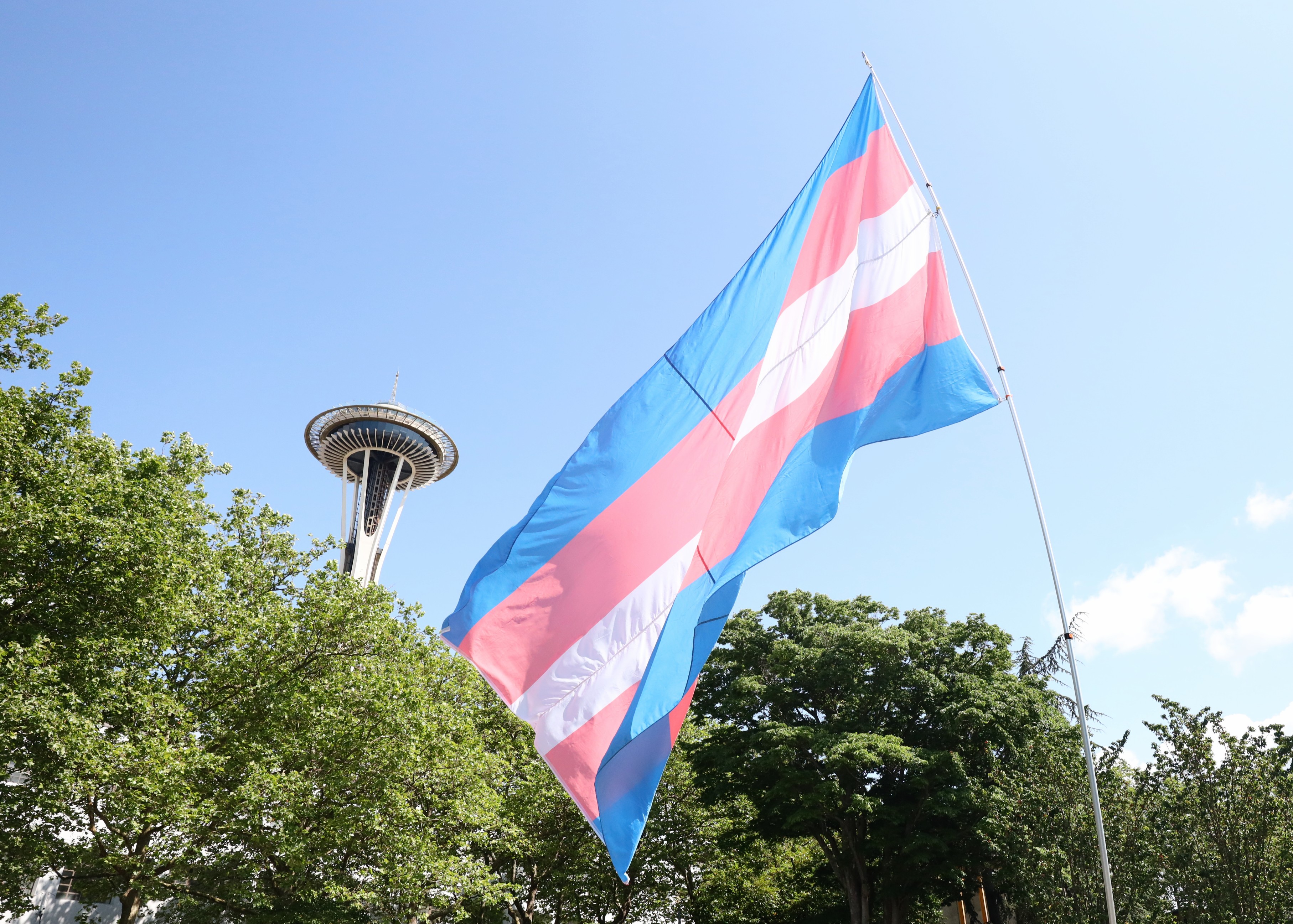
While Queer youth only account for 10% of the youth population, up to 40% experience homelessness and are generally forced out of their homes due to their sexual orientation or gender identity, according to the National Coalition from the Homeless. In a UCLA William’s Institute survey, 68% of unhoused youth respondents had a history of family rejection; 65% had a history of mental health challenges, like depression or anxiety; and 54% had a history of family abuse, including physical, emotional, and sexual.
When the World Professional Association for Transgender Health released treatment standards for Trans youth this spring, the Department of Health and Human Services issued a review and said behavioral therapy needs to be prioritized, rather than gender-affirming care for LGBTQIA+ who are experiencing gender dysphoria. This review claims that medical groups promote medical treatment instead of behavioral therapy because of a “mischaracterization of such approaches as ‘conversion therapy’.”
While Trump’s order suggests that it will provide “humane treatment,” he pulled funding for the 988 LGBTQIA+ crisis line, known as the “press option 3” button, which had counselors specialized in Queer issues and which acted as a lifeline.
Local response
In the June 28, 2024, Supreme Court ruling on Johnson v. Grants Pass, cities were authorized to arrest and ticket people for experiencing homelessness. That year, of 320 anti-homelessness bills across the nation, 230 passed. On June 26 of this year, Washington Representative Pramila Jayapal (D-7) and Florida Rep. Maxwell Frost (D-10) introduced the Housing Not Handcuffs Act to prevent federal agencies from criminalizing homelessness.
“Every single person in the richest country in the world should be able to have a roof over their head and a safe place to sleep, it’s that simple,” said Jayapal. “There is nowhere in this country where you can pay rent on a minimum wage salary. By criminalizing aspects of homelessness, cities and states across this country are only creating greater barriers for people to access housing— something that is already far too scarce. Fining people who already can’t afford to live makes no sense and will only result in longer-term homelessness.”
This Act states that unhoused people cannot be arrested or ticketed by federal authorities when they live on federal lands (and have no other living options) and aren’t blocking traffic, are asking for donations and help in public spaces, are practicing religion in public spaces, or are living in a vehicle that isn’t blocking traffic.
But Congress has been ineffective at passing anything short of fascist this year due to the republican majorities in both chambers.
Seattle Mayor Bruce Harrell also denounced the executive order, stating it “drives a false narrative to distract from failed campaign promises like bringing down prices and effectively addressing global instability.”


 Through the Static
Leave a reply to ICE grabs and detains two Real Change News vendors – Through the Static Cancel reply