By Hannah Saunders
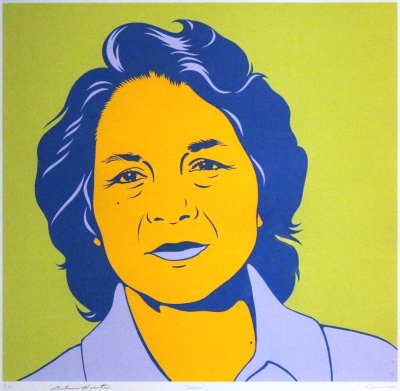
Last month, the New York Times released an article about United Farm Workers (UFW) leader Cesar Chávez sexually assaulting and raping girls, with co-founder Dolores Huerta also coming forward about the abuse she endured in the 60s. On April 10, Washington celebrated Dolores Huerta Day for its sixth consecutive year, and after the experiences of survivors were published, public attractions that include Chávez’s name are undergoing some changes.
Gov. Bob Ferguson did not recognize Cesar Chávez Day on March 31, and said Dolores Huerta Day is “an opportunity for us in Washington to celebrate her work fighting for farmworkers, helping ensure safer working conditions, more benefits, and better wages. Farmworkers do backbreaking work, really challenging work, and they deserve to be compensated for that work.”
Radical Women, a national socialist-feminist organization, said Chávez’s sexual abuses were about power and control, and that under capitalism, women are viewed as the property of men, the church, and the state. Yolanda Alaniz of Radical Women said UFW has a victorious yet mixed history, and has written a book alongside Megan Cornish titled “Viva la Raza: A History of Chicano Identity and Resistance.”
“But the union [UFW] also had weaknesses that led to its defeats. It made unprincipled deals with bourgeois politicians, engaged in red-baiting and internal censorship, and betrayed immigrant workers,” the book stated.
Alaniz grew up in Eastern Washington as a farmworker and became an activist in the Chicana/o student movement and UFW at UW. There was barely any support for women and girls in the 60s, and Alaniz said that Chávez used the Catholic Church— which taught that women were meant to produce babies and make obedient wives— as a way to control UFW membership and allow the movement to protect a predator.
“As union democracy declined, Chávez took steps to gain authoritarian control over people—particularly women and girls—in the organization. He developed ties with the cultish drug rehabilitation organization, Synanon, which he used as a form of attack therapy,” Alaniz said. “He pushed out radical unionists and scapegoated undocumented farmworkers. He alienated Filipino union members by forging ties with the brutal Marcos dictatorship.”
Radical Women is pushing for the creation of a commission of UFW-associated women to investigate and decide on adequate reparations for survivors, and to create action plans to prevent sexual assault from recurring in the future.
“All unions should adopt such measures and be prepared to fight for members experiencing discrimination and abuse,” Alaniz said.
After the stories of survivors surfaced in mid-March, Mayor Katie Wilson said South Seattle’s Cesar Chávez Park will be changing its name, and the Seattle Parks and Recreation Department is accepting new name suggestions until April 14.
“El Centro de la Raza will be renaming a garden on our Beacon Hill campus currently named for Cesar Chávez. We are also removing public art throughout Plaza Roberto Maestas and images displayed on our traditional altars, while conducting a broader review of tributes within our building,” the organization, which called SPD on undocumented community members during Gov. Ferguson’s law enforcement face mask ban, said.
Help us keep reporting! Become a monthly donor of $7, $10, or $25 now by scrolling below or at Ko-Fi.com/ThroughtheStatic, or Venmo @SaundersHannah. Thanks for your support!


 Through the Static
Leave a comment