
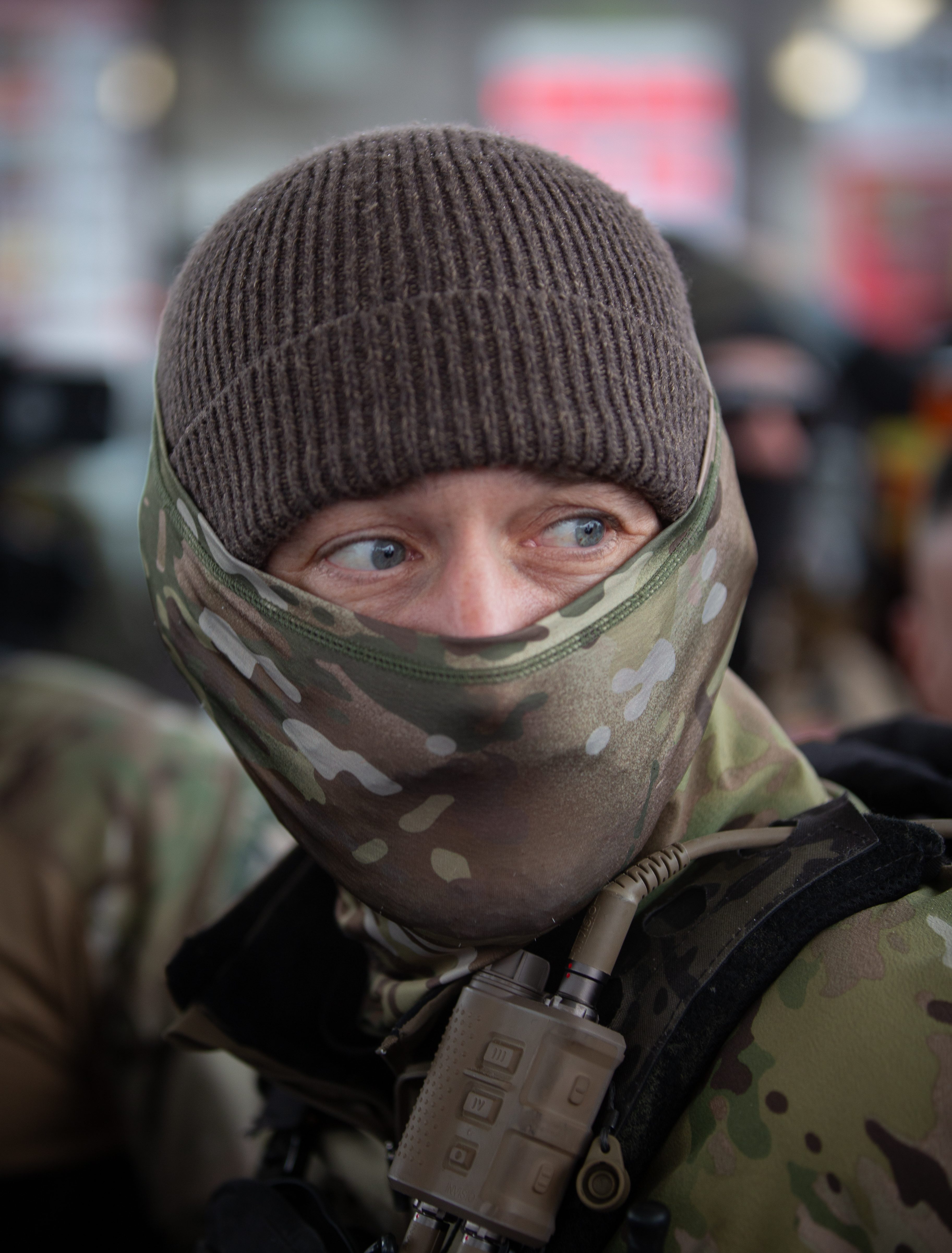
Photo by Chris Rojas
By Hannah Saunders
Many of us have seen the sign by now: “Pursuant to City of Seattle policy, this property shall not be used for civil immigration enforcement staging, operations, or processing.” Seattle Mayor Katie Wilson staged a photo opportunity while helping a Parks Department employee hang one up on February 26, and now a new ordinance would not only create more signs, but also allow the City Attorney’s Office to prosecute any staging or enforcement activities. But our undocumented residents state these actions aren’t enough and demand direct aid to impacted communities. There are also a few more caveats at play.
At the March 10 Seattle Public Safety Committee meeting, members passed Council Bill 121164, and it will next be heard and likely voted on by the City Council during its March 17 meeting. First-term Councilmember Dionne Foster brought forth an amendment to ensure the ordinance covers more properties.
“We are moving from saying ‘city-owned and controlled’ to ‘city-owned or controlled,’ is the smalll language change,” Councilmember Foster said.
City-controlled properties are those that the city holds any ownership or lease interest in that it has not obtained through a contract. The amendment states that “Seattle’s support system for vulnerable residents is built around a network of City-run programs, county partnerships, and community-based organizations, some of which operate from properties that are leased from The City of Seattle.” One example is the King County Regional Homelessness Authority, which provides crisis response, emergency shelter and rapid rehousing, and other supports.
This amendment will ensure that facilities providing “critical essential services” are not interrupted, Councilmember Eddie Lin said. But the ordinance neglects to get into detail about how the City Attorney can hold DHS accountable, and many of them wear face masks to conceal their identities. While the legislature passed Senate Bill 5855, which bans law enforcement officials from using face coverings, the only action that can be taken is if an individual is suing an agent for damages and attorney fees, among others.
“A peace officer shall be reasonably identifiable by the officer’s clearly displayed name or other information on the officer’s uniform that members of the public can see and the agency can use to identify the officer,” according to the bill text as passed by the legislature.
But ICE will continue to hide their faces, with the Trump regime encouraging the officers to take protective measures from doxxing efforts, leaving SB 5855 up to citizens to document as much as they can in order to obtain enough evidence to identify an ICE agent to sue them. And Seattle residents cannot rely on the police to assist them, either. Former Seattle Police Officer Guild (SPOG) President Mike Solan, who is now back in the field, previously cackled at Mayor Wilson’s directive for Seattle Police to prevent ICE from staging operations on city property, and to “investigate, verify, and document” any activity.
The City Attorney and Seattle Police also work closely with each other when working to prosecute ordinance violations, and while City Attorney Erika Evans is progressive and has a track record of accomplishments, this creates a fracture at the local level. And after all, the department had the highest number of officers who engaged in the January 6 insurrection out of all the nation’s police departments.
With all the hubbub surrounding all this legislation, the immediate and direct impact to halt or even stymie ICE operations seems out of reach, and are what the state’s undocumented communities are referring to as performative. ICE agents and bad actors are kidnapping and disappearing residents— and as we saw in Minnesota, shooting U.S. citizens in the face. The violence is escalating, with the country starting a war against Iran alongside Israel, and as DHS recently signed a lease for office space in Tukwila at the Sabey Corporation’s Riverfront Technical Park property.
Our undocumented communities are demanding local leaders take action now through legal aid, a renter eviction moratorium, a rental assistance fund, food assistance and community care funds, an ending all surveillance— and to not have the police called on them during council meetings.
The creation of more anti-ICE signs in Seattle are expected to cost $45,000 and will be funded through various departments’ appropriations, and there will be additional labor costs to install the signs which the city estimates will also be included in appropriations.
While these signs and ordinances may make people feel more welcome— particularly those who are white and privileged who can still comfortably leave their houses, go to work, buy groceries, and pick-up their children from school— ICE will continue to disregard and violently violate the rule of law, as we’ve seen time and time again.
Appreciate our work? Become a monthly donor of $5, $10, or $25 now by scrolling below. Thank you for your support!


 Through the Static
Leave a comment