
By Hannah Saunders
Yesterday, the Seattle Office of Inspector General (OIG) published its sentinel event review (SER) of the May 24, 2025 Cal Anderson Park protest, citing a need for additional training and cultural education at the Seattle Police Department. That day, hundreds of LGBTQIA+ community members and allies gathered to protest an anti-Trans and anti-Queer, Christian-fascist group, MayDayUSA, which was holding a “Free Haircuts for Kids” event and rock concert in the heart of Seattle’s Queer neighborhood.
Over the span of seven hours, police arrested 23 people, and 16 community members reported use of force. The SER pinpointed a total of 66 factors that created the trajectory of that day’s events, with a focus on the permitting process for a rally in a historically Queer park, named after Washington’s first openly Gay state legislator, Cal Anderson; one attempted arrest for alleged misdemeanor property destruction, as well as 11 other arrests; and using bikes to create fencing, escalation, and use of force regarding the cop-made barricade.
“There is important cultural significance of the Capitol Hill neighborhood, and specifically Cal Anderson Park, for LGBTQ+ communities. This context is particularly salient against the backdrop of federal actions that threaten transgender rights. The lack of acknowledgement or understanding of this context by SPD contributed to the heightening tensions among police and counterdemonstrators,” according to the report.
The SER report follows three private panel discussions that had two facilitators, six community members- including two who were directly impacted by SPD’s violence— and SPD officers Sean Moore, Lisa Judge, Chris Coett, Yvonne Underwood, Richard Bonesteel, Mathew Didier, and Larry Longely. The SER was cut short due to an information leak.
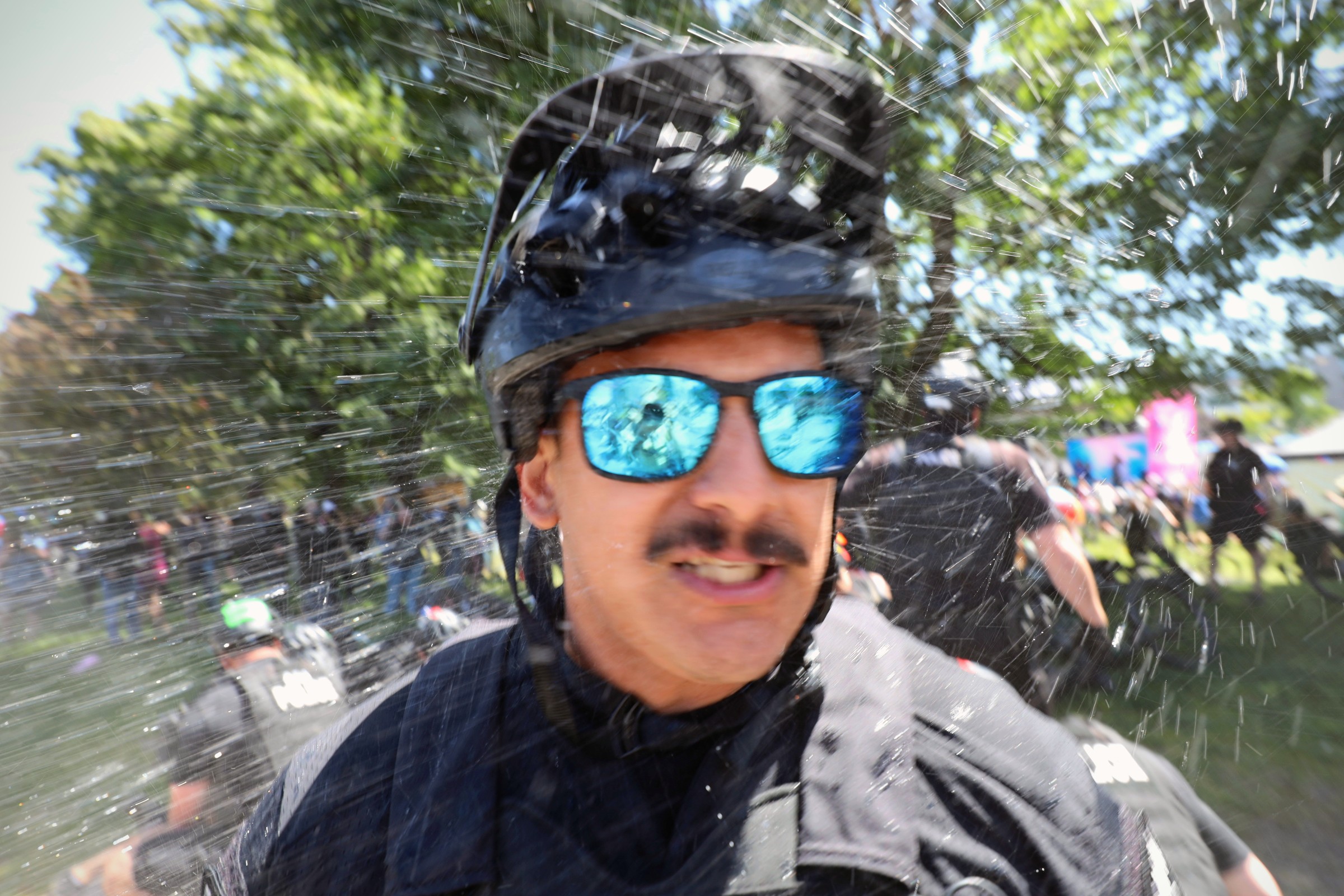
It highlighted SPD’s outdated assumptions that black bloc and antifa are violent and instigators, which put them in a reactionary state early on. TtS previously reported on SPD’s understanding of these forms of resistance, obtaining body-worn video footage from a panel source showing former CRG commander, Matthew Didier, declaring that bloc were about to do something dangerous.
“We are going to do some fucking work, but we are going in this time guns blazing,” Didier said. “We are past talking to people, we’re here to fuck people up now.”
Timeline of that day
Police officers arrived to Cal Anderson Park mid-morning to create fences with their bicycles to increase distance between event attendees and counterdemonstrators. By 12:30 p.m., POET asked protesters who stood with signs and megaphones to return to their side of the barricade, and rapidly called CRG to assist with boundary enforcement when protesters ignored their requests.
“After CRG was called, but before they had arrived, counterdemonstrators approached POET officers to clarify the parameters of the permit, question perceived changes in barricade location, and express concerns about MayDay USA attendees prohibiting counterdemonstrators from accessing public restrooms. POET officers spoke with counterdemonstrators but were unable to assuage community concerns related to the permit, barricade, or restroom access,” according to report.
The SER highlighted how the SPD Intelligence Unit received short-notice of the event on May 11, and three days before the rally, SPD reached out to MayDayUSA and suggested transferring activities to Westlake Park. SPD panelists’ were allegedly frustrated that the Parks and Recreation Department did not notify them of the event.
“There was limited opportunity for POET [Police Outreach and Engagement Team] to pre-engage with community, due to both time constraints and poor or non-existent LGBTQ+ community relationships with SPD,” according to the report, which added that the SPD’s LGBTQ+ liaison position was empty.
The act that kicked off SPD violence was when a small group of protesters released three balloons that MayDayUSA set up throughout the park, including on trees. Didier immediately responded by ordering an arrest for property destruction, but officers lost the suspect in the crowd.
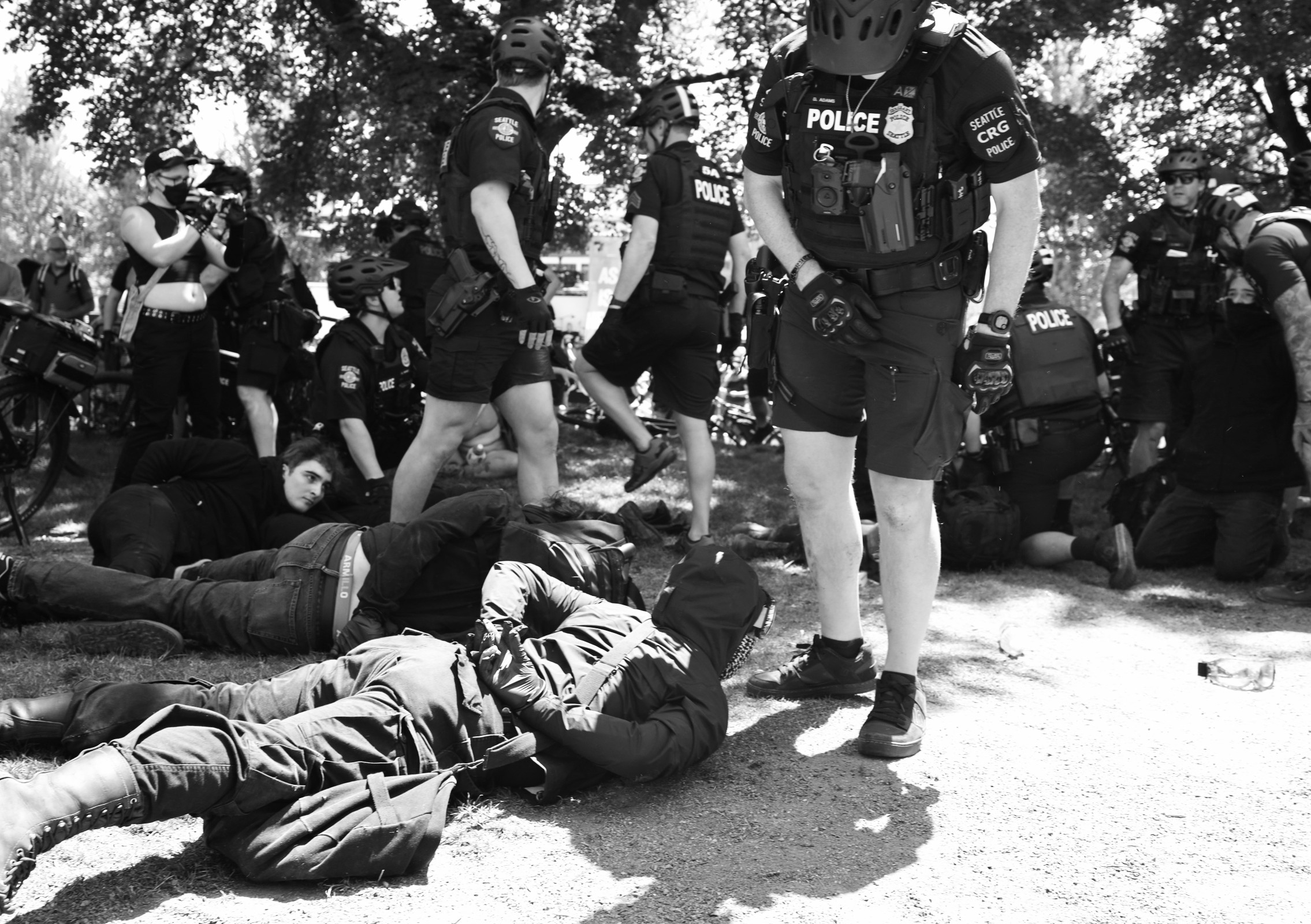
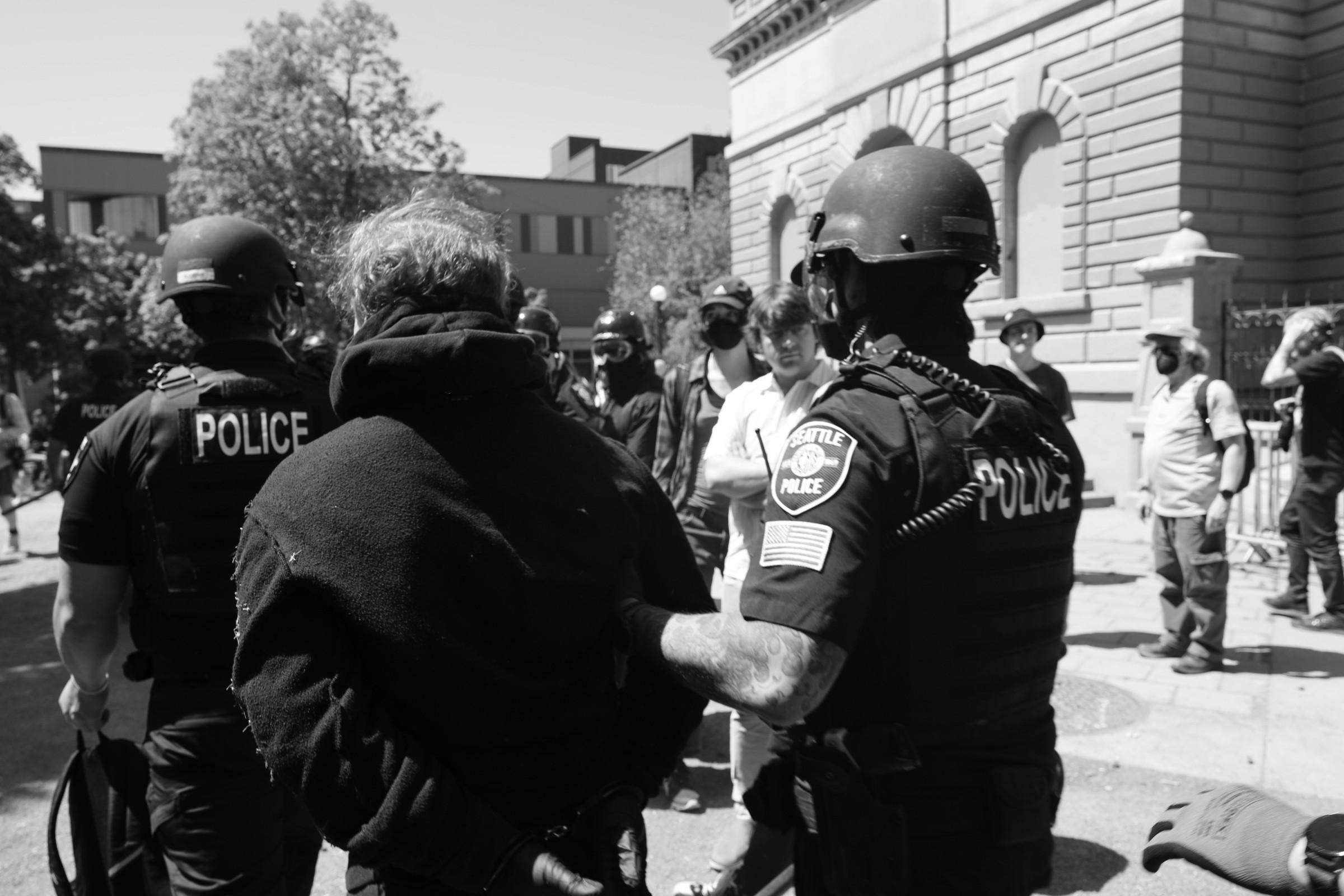
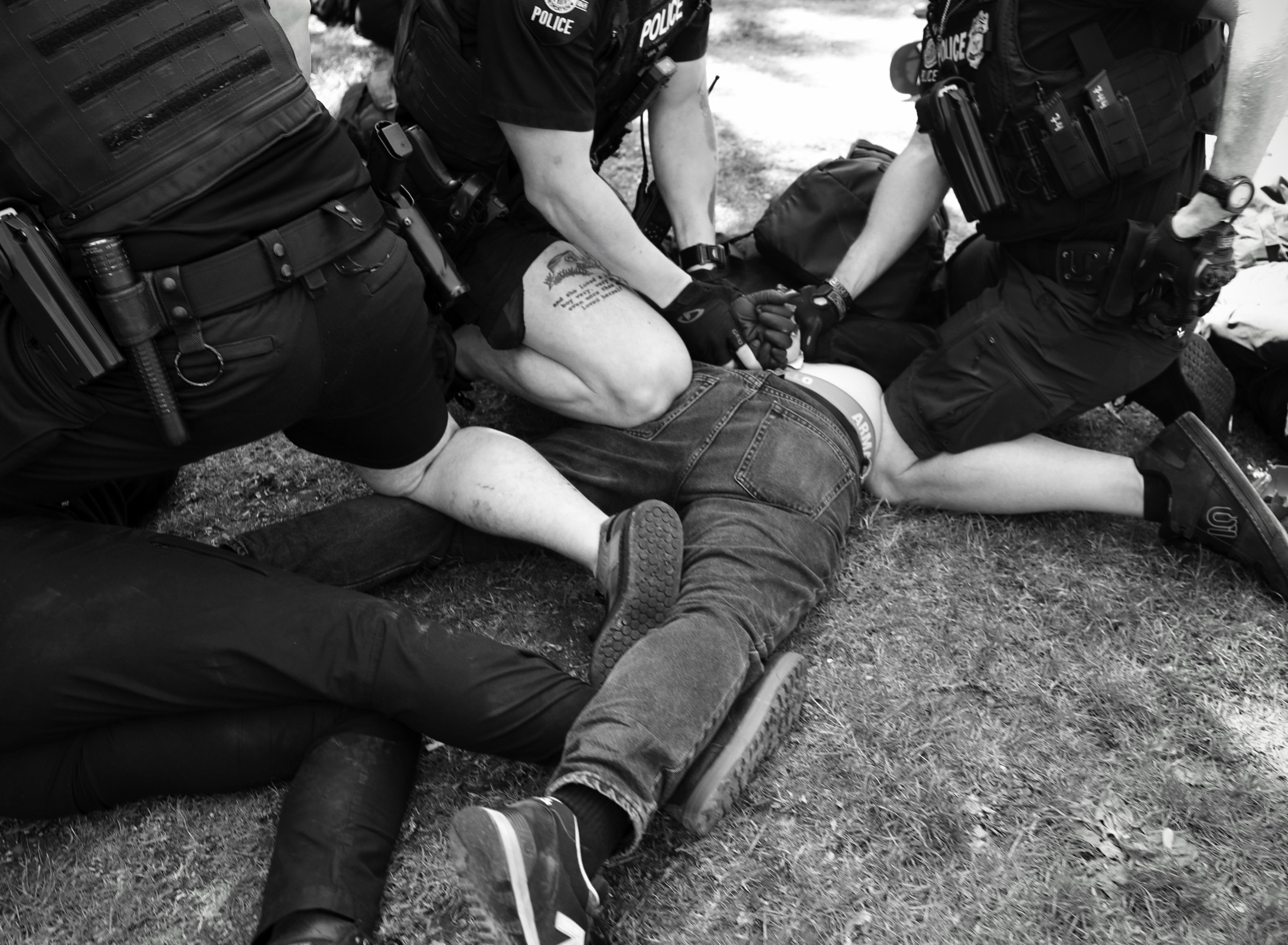
“Simultaneously, another CRG bicycle unit rode into the counterdemonstration zone from the north in pursuit of a subject alleged to have smashed a bubble maker, while a third CRG unit rode into the counterdemonstration zone from the southwest in pursuit of a third subject. The three CRG units converged in an uncoordinated manner on the counterdemonstration zone, knocking people to the ground, yelling commands, and ultimately arresting 11 counterdemonstrators,” according to the report.
One detail of the report is that the MayDayUSA security liaison would assist SPD with prosecuting protesters for crimes.
“The SPD request for the MayDay USA security liasion to assist with the prosecution for the arrest of the counterdemonstrator appeared inconsistent with SPD policy for content neutrality when policing First Amendment gatherings.”
— SER report
That day, CRG officers trapped counterdemonstrators in a circle and ordered them to “move back,” without further direction or a chance for people to follow their orders at times. Around 2 p.m., more tensions rose when barricades SPD set up began to sway and fall. Right before 4 p.m., SPD arrested someone for allegedly pushing down fencing, yet several witnesses stated it fell by itself. That person’s mother began pushing the fencing in one section, while demanding officers release her daughter, and officers told her that she’d face arrest if she did not cease.
“The mother pushed the fence to the ground and retreated with the help of other counterdemonstrators before being tackled and arrested,” the report stated. “When the barricade was reestablished on the sloping hill, the barricade became a flashpoint for counterdemonstrators and police, due largely to the physical positioning of the fencing. The fencing sections were placed somewhat precariously along the slope of the grass bank and fell easily; they were also connected, resulting in a domino effect caused by one falling section.”
Further analysis
Panelists’ talked about SPD’s overreaction by responding to protesters in riot gear, and how the department treated the MayDayUSA group and counterdemonstrators differently. SPD claimed it was seeking to remove bad actors, but chose to pepper spray and launch pepper balls into an entire group of people for trying to assist each other during arrests; officers also used their batons and bikes to push counterdemonstrators back, tackled and beat people, and did not active their body worn video cameras.
The report outlined how MayDayUSA denied SPD’s initial request to end the event early, but later agreed to cutting it short by three hours. Washington State Patrol was dispatched to the park, and crowds dispersed around 6 p.m.
Suggestions OIG has includes adding “social identity-based analysis to better anticipate how protest group identities interact with space and symbolism, and how these factors shape mobilization dynamics,” and “conduct[ing] training for lietuenants, Captains, and Chiefs about the ICS and roles they may be assigned to.” ICS stands for Incident Command System, which is used for managing large-scale events and for emergency response.
Help us keep reporting! Become a monthly donor now.


 Through the Static
Leave a comment