
By Bianca Jensen
In the bustling District of Columbia, even the sidewalks seem to be bursting from their edges, with deep roots of old trees tearing holes through worn brick walkways. The license plates of cars that rushed past read “No taxation without representation,” and kicked up flurries of bright soggy leaves that cut through the humid afternoon air. Men in suits shuffled by, their gazes absorbed into the screens of smartphones. Teenage National Guardsmen loitered in small groups of three or four, shifting their weight awkwardly from one foot to another, their eyes darting around with anticipation. Some of them had hunting dogs on leashes, and they guided one past me, hovering for a moment as it paused to sniff in my direction. I’ve come to the city to visit an old friend for Halloween.
It’s 2025 and on November 1, more than 42 million Americans lost their access to Supplemental Nutrition Assistance Program (SNAP) benefits. About 39% of those people are children. That’s one in eight Americans now facing hunger, or already struggling with it. I wanted to see for myself the demolished East wing of the White House, which will be turned into a ballroom and made possible by sponsors with household names, like Amazon and Apple. Corporate competitors like Google and Microsoft have come together, Palantir and Meta too. Even the largest arms-producing and military services company in the world, Lockheed Martin, has funded Trump’s grand ballroom. Other sponsors include Coinbase; Hard Rock International; T-Mobile; Caterpillar; Comcast; HP; Micron; Union Pacific Railroad (which famously embezzled federal funds in the past); and more. It leaves Americans wondering why these corporations are interested in funding a White House ballroom, aside from seeking the favor of the current administration.
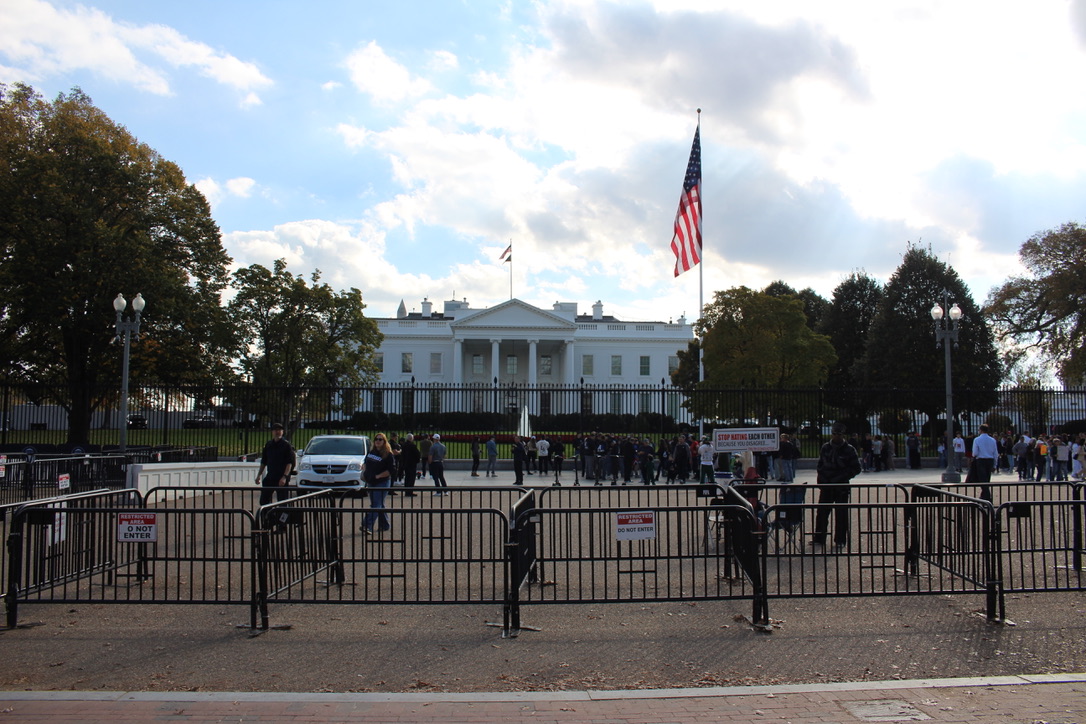
As I made my way to the White House, the sidewalks were enclosed with waist-high black metal gates, not unlike the ones used at rodeos and music festivals. The White House itself was surrounded with ornate black metal fencing, and chubby men in Secret Service uniforms. The East wing – or where it had been – was obscured from view with tall, fabric covered panels fencing, the shorter stamped on cheap fabric with our national emblem.

In front of the White House, the view was less impaired, leaving room for groups of tourists who flocked to the fence, leaning in towards each other to capture the moment in a selfie. A group of young teens were ushered through by adults wearing laminated badges, some of the teens had red hats on. Some of the tourists did, too. The area was filled with little carts selling hot dogs, Shawarma, and pink, gold, and white versions of those infamous red hats. The people selling them had wary eyes, and as I wandered the sidewalks I noted that most of them had accents, and none of them were white, yet all of the police and guardsmen I saw were.
In DC about 20% of people receive SNAP benefits, with about 85,000 district households relying on the program. This is significantly higher than neighboring states like Maryland and Virginia, both with around 10% of their population on food assistance. In fact, DC is second only to New Mexico with 21% of their population relying on SNAP.
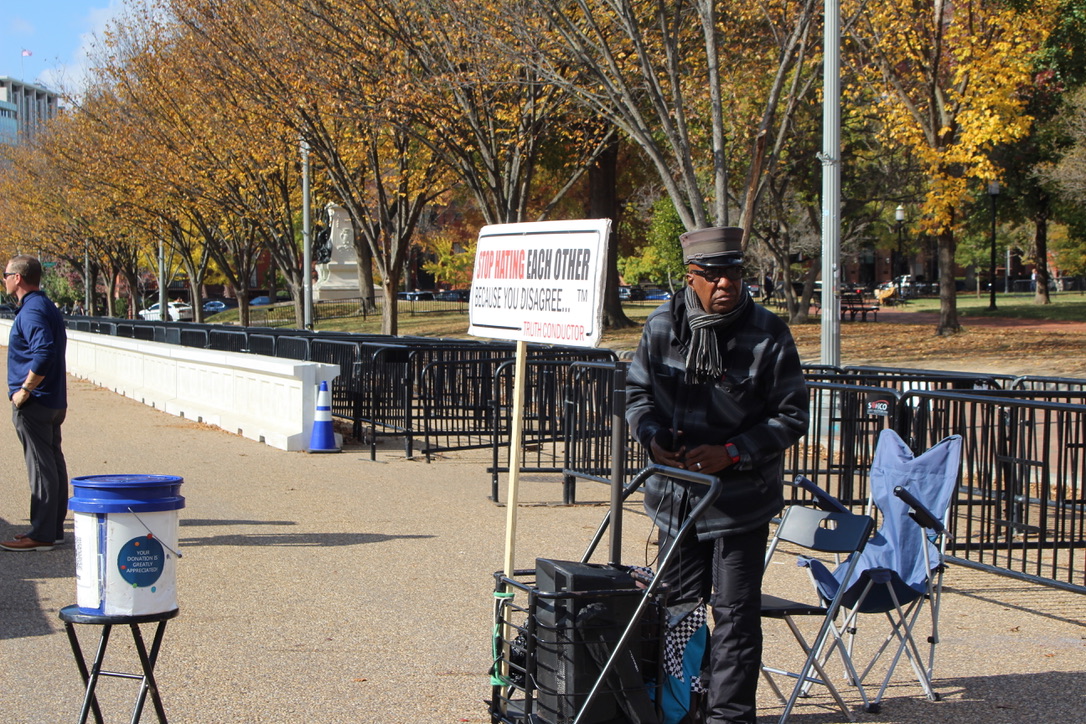
I joined a small group of older people holding signs up in protest. None of their signs addressed the food assistance crisis that had just begun. They appeared to be largely concerned with Trump’s military policy and his treatment of veterans, but did not make specific mentions of our imminent invasion of Venezuela, or Trump’s previous threats to invade Greenland and Panama. Tourists and businessmen walked around them as if they barely noticed the signs. One man had a speaker and a microphone, with a sign that read “STOP HATING EACH OTHER BECAUSE YOU DISAGREE.” He called himself the “truth conductor,” and he played songs by The Foundations and Jackson Five on his speaker system. He didn’t preach much except announcing that donations are welcome and our nation is divided.
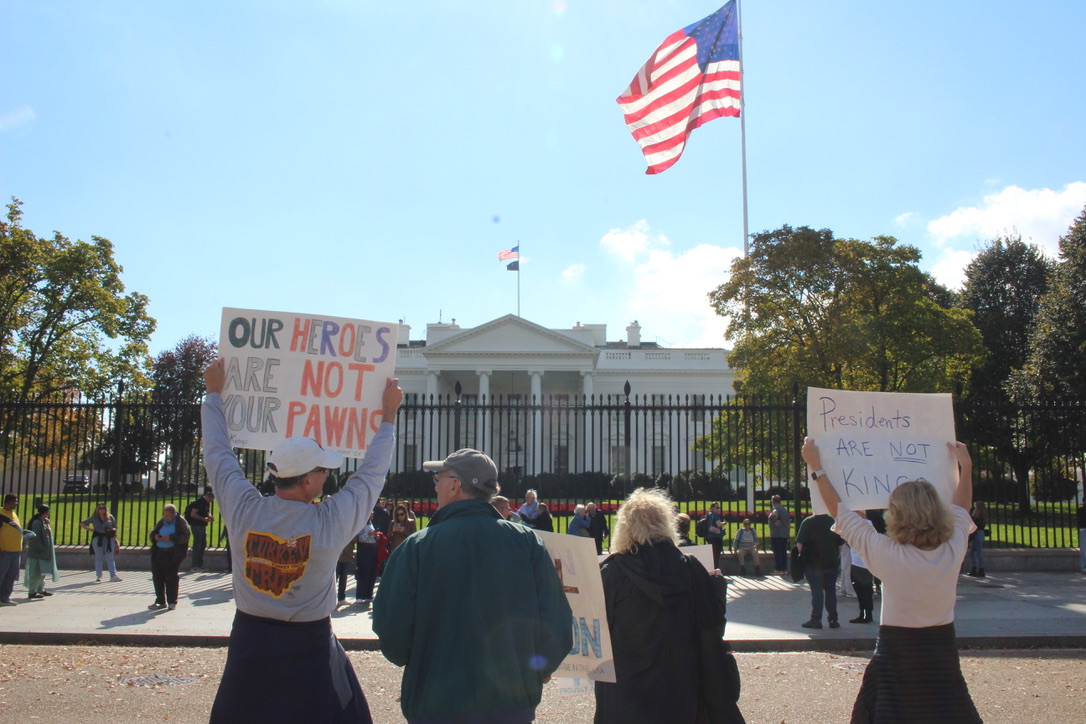
I stayed behind and listened to the sounds of construction for a little while longer. It’s true that we’re divided. Life in the Capitol seems to be whirring on as usual, and I’m not sure what I expected. It seems to be the same as I’ve encountered in the Seattle area; people discuss what a shame it all is, then go on about their days. I’m not sure what else I expected them to be doing. I’m not sure what I should be doing other than protesting when I can. I wonder what might happen if more people joined their local protests daily like the small group gathered outside the Peoples’ House, not just at the planned and sponsored nationwide press events like No Kings Day, but the small groups of protesters gathering outside federal buildings each day.
The protesters in Portland have shown us what an impact consistency can have, and how much mutual aid can strengthen a movement. I’m beginning to feel like we’re piecing together our next steps through these small tests of trial and error, like roots seeking beneath the ground, preparing to grow.


 Through the Static
Leave a comment