
By Daniel Goodman, Joshua Knapp, Ximena Velazquez-Arenas, and Ben Clinton
Three choreographers, eight dancers, one drag queen, and a chosen family of Queers will walk into Erickson Theatre for their final performance of the annual Whim w’Him Fall Choreographic Shindig tonight at 8 p.m., and here’s the thing: it’s democracy in motion. Each year, the company dancers flip the script on traditional hierarchy, selecting three choreographers from a highly competitive pool of international applicants. In a cultural moment when hierarchy and gatekeeping feel increasingly toxic, Whim w’Him’s dancer-led curatorial process feels quietly revolutionary. When the people doing the work get to choose who creates the work, something shifts. The result isn’t just different art—it’s art that emerges from trust, collaboration, and genuine artistic curiosity.
At different times, we felt mirth, glee, awe, and grief. But also hope. Out of necessity, we, in our chosen families, care for one another because we are often rejected from our blood families, from society at large, and from the institutions that we are a part of. No one can redraft us out of history. This program instructed us on how to survive.
Betty Wetter doing what Betty Wetter does best: slaying with surgical precision
She hosts one performance each year and told us that she’s loved seeing how the company has evolved over the years. “Betty is as entertaining, gracious, and gorgeous as ever,” one family member noted, and they weren’t wrong. Her opening set was “a masterclass in irony, self-deprecation, and just plain absurdity”—the perfect antidote to contemporary dance’s sometimes suffocating seriousness. As another put it, “Having her introduce us to the program sets your mind in a less serious state than you might otherwise approach contemporary dance. This, at the end of the day, probably makes us all more able to appreciate and enjoy it.”
Wetter delivered exactly what we needed: “sensational and heartfelt… just what we needed in these trying times.” Her bright hair matched her bright spirit, and her sharp tongue—wielded for good—created the emotional architecture for everything that followed. Also, thank you, Betty, for learning to play the guitar like an expert. We LOVED the strings.
Beautiful mayhem meets the cultural moment
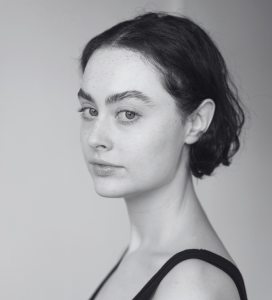
Choreographer Chloe Crenshaw’s Poor Souls landed like a manifesto for 2025, and she knew exactly what she was doing.
“A meditation on hedonism, during and after the party,” Crenshaw explained. “The work reflects on instinct, on running toward things that destroy us as much as they delight us, and on the human pull between indulgence and consequence.”
The piece felt like watching a “clubby rave scene” unfold in real time—dancers running “towards sources of pleasure and indulgence and away from pain,” experiencing “a real high and a come down.” It was “beautiful mayhem,” capturing what we describe as “the cultural moment of 2025… showcasing the anxiety of the world we live in today and the methods we use to cope.”
But Crenshaw wasn’t just serving escapism. She was also asking the harder question: “How do we act when things are overwhelming to the point that maybe we don’t care about the destruction of the self or others?” In a political moment defined by climate collapse, rising authoritarianism, and the grinding brutality of late-stage capitalism, that question feels less like artistic inquiry and more like a survival strategy.
The dancers took “a riotous journey… together as a response to painful things that disturb us: violence, grief, heartbreak.” Sound familiar? When democracy feels like performance art and the news cycle operates like psychological warfare, sometimes the only rational response is to lose yourself in the bass drop, to find communion in collective collapse.
“This performance moved me to tears,” confessed one of us. “It was emotive, harsh, and vulnerable. Left me wanting more.”
Another called it “a window into the essence of the heartbeat of the soul. Rhythm, turmoil, endurance. Simply put: it felt so relevant! It spoke to my experience.”
That’s the thing about great art—it bypasses your brain and punches you in the solar plexus. Crenshaw’s work left people feeling “awe, humility, and validation for the human condition.” In a year when the human condition feels particularly fragile, that validation hits different. When the world feels like it’s ending, sometimes you need art that says: yes, we see the ending too, and we’re going to dance through it together.
Cosmic laws and impossible yearnings
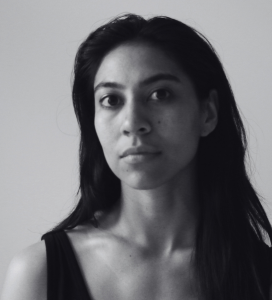
If Crenshaw’s piece was about collective destruction as a survival strategy, choreographer Lea Ved’s Endless, Near offered something more eternal: the recognition that our need for connection operates on the same frequency as planetary motion. Ved described her process with the kind of cosmic awareness that makes you want to lie down in a field and contemplate your place in the universe:
“We know that we are governed by the same laws as the planets, as what changes the tides, what changes the seasons… I think there’s a tapestry being our creative being our art, our bodies our dancing, and the scope of something much larger than ourselves.”
In a moment when political forces seem intent on atomizing us—making us strangers to our neighbors, suspicious of our communities, isolated in our grief—Ved’s work insisted on connection as a fundamental force. The piece moved “between the tension of those very far distal points,” and we felt it viscerally. “Beautiful. It was tense, the push and pull of love,” one of us observed.
Here’s where it gets political: even our most intimate longings are shaped by the world we’re living through. “Reminded me of how it feels to desire love and closeness, how we yearn for what is ultimately impossible (complete melding of souls), and how once we reach the beloved, we yearn once more for freedom. The heart is insatiable,” one reflected. That insatiable quality—the way we push and pull even in love—mirrors the larger cultural moment where we’re told we can’t have security and freedom, community and autonomy, safety and wildness.
Ved’s work made cosmic longing feel intimate, and intimate longing feel cosmic. “We’re not only embodying the stage,” Ved explained. “There’s some dissipation of life from the walls. It’s kind of opening the windows and opening the doors.” In times when walls feel like they’re closing in—literal borders, metaphorical barriers, the suffocating grip of surveillance capitalism—that opening feels like resistance.
Dream logic and agonizing pretense
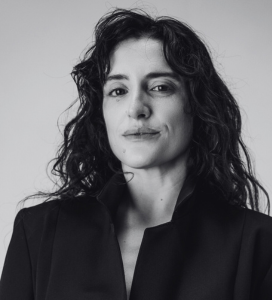
Choreographer Genna Moroni’s LIVIN THE DREAM closed the afternoon with what felt like a fever dream of late-stage capitalism. “Manic and tragic—opposite ends of the spectrum,” one viewer noted, and that emotional whiplash felt intentional. In a world where we’re told to “live our dreams” while working multiple jobs just to survive, where social media demands constant performance of happiness while anxiety and depression rates skyrocket, Moroni’s piece cut straight to the bone.
“So this piece is really focused around dreams. Our dreams while we sleep, our dreams while we’re awake, and kind of where those lines blur,” Moroni explained.
But here’s the thing about dreams in 2025: they’ve been weaponized. The “American Dream” rhetoric feels like gaslighting when homeownership is a fantasy and student debt is a lifetime sentence. Moroni’s lucid dreaming aesthetic created a space where we could examine the gap between what we’re told to want and what we actually need.
The surrealist elements Moroni loves reflected the surreal reality of contemporary life itself. As one of us put it: “I felt myself in preparation for the outer persona, the agonizing pretense, and the equally heavy solitude. Funny, painful, artful.”
That “agonizing pretense” hits different when you realize we’re all performing wellness on Instagram while the planet burns, performing productivity while corporations extract our life force, performing optimism while democracy crumbles. Moroni’s dream logic made visible the psychic cost of living in a society that demands constant performance while offering diminishing returns.
The through line: surviving the moment
Taken together, these three works formed a kind of survival guide for 2025. Crenshaw showed us collective hedonism as a response to overwhelming destruction. Ved reminded us that connection operates on cosmic scales, that our need for each other is as fundamental as gravity. Moroni exposed the exhausting pretense of contemporary life while suggesting that dreams—even lucid ones, even impossible ones—remain a form of resistance.
This wasn’t just three dances. It was three strategies for staying human in an increasingly inhuman world: dance through the ending, remember you’re connected to something larger than the news cycle, and hold onto your dreams even when—especially when—they’ve been co-opted by capitalism.
For Queer audiences, this trilogy felt particularly urgent. We know what it’s like to survive by finding each other in the dark, to create beauty in the face of destruction, to dream ourselves into existence when the world insists we shouldn’t exist at all. These choreographers and Whim w’Him didn’t just make art—they modeled survival. We know what it feels like when someone else controls the narrative about our bodies, our dreams, our capacity for beauty and meaning. Watching dancers take curatorial control, then seeing them choose work that explores vulnerability, impossible longing, and the “agonizing pretense” of daily performance—it hits. It hits deep. But the pain of it is intoxicating.
The bottom line
Whim w’Him’s Fall 2025 Shindig reminded us why live performance still matters in an increasingly digital world. These weren’t just three dances—they were three invitations to feel something in three different ways.The final performance will take place tonight, and if you’re reading this and wavering, stop wavering. In times like these, we need all the beautiful mayhem, cosmic longing, and dream logic we can get. Go see it if you’re lucky enough to get a seat. Visit whimwhim.org for tickets and more information.


 Through the Static
Leave a comment