
By Hannah Saunders
The June 25 White House memo, “The One Big Beautiful Bill is a Historic Investment in Rural Healthcare,” claims that vulnerable communities will be protected and provided for, but numerous Washington state leaders have sounded the alarm about how the bill will harm patients and how it’s now putting 14 rural hospitals at risk of closure.
After the “Big Beautiful Bill” was signed on July 4, the Washington State Hospital Association (WHA) issued a statement, calling it a “disaster” for hospitals and patients.
“The biggest risks: Hundreds to thousands will lose health insurance, and payments to hospitals for providing services to Medicaid enrollees will be slashed. These provisions jeopardize the health care system for everyone. Important hospital services will disappear, nurses and doctors will be laid off, and several Washington State hospitals are at risk of full closure,” it said.
The bill cuts $900 billion in Medicaid, which is the largest Medicaid cut in history, and will raise costs for everyone’s health insurance in a system that’s so for-profit that it’s been killing Americans for years. About 17 million Americans are expected to be booted, including about 300,000 Washingtonians. About 1.95 million people rely on Apple Health, the state’s Medicaid program, including approximately 1 out of 2 children.
Hospitals are legally required to provide care to all patients, regardless of insurance coverage or ability to pay. The loss of Medicaid results in being uninsured or underinsured, creating higher costs of care for the patient. If the patient is unable to pay thousands of dollars out of pocket for care, the hospital will not be reimbursed and will lose money. People with health insurance generally pay a monthly premium, and when they receive care, their insurance picks up much of the costs.
Currently, Medicaid reimbursement rates for patient care are lower than Medicare or private insurance, and the profit margins for rural hospitals are smaller than in urban areas. Medicaid cuts mean hospitals might close down certain departments, like obstetrics and emergency room care— or shutter completely. Washington hospitals at risk of closing are:
- Samaritan Hospital in Moses Lake
- Toppenish Community Hospital in Toppenish
- Summit Pacific Medical Center in Elma
- Odessa Memorial Hospital in Odessa
- Coulee Medical Center in Grand Coulee
- Providence St Joseph’s Hospital in Chewelah
- Prosser Memorial Health in Prosser
- Klickitat Valley Health in Goldendale
- Othello Community Hospital in Othello
- Three Rivers Hospital in Brewster
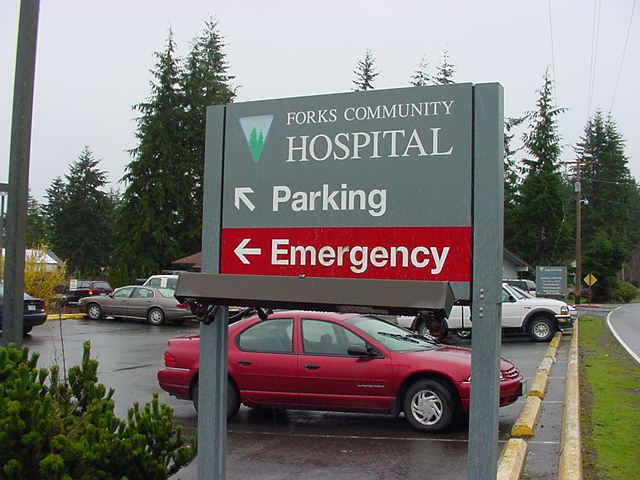
- Forks Community Hospital in Forks
- Mid-Valley Hospital in Omak
- Astria Sunnyside Hospital in Sunnyside
- Mason General Hospital in Shelton
Trump’s Rural Health Transformation Program
The White House memo cited the Rural Health Transformation Program, which it claims will provide states with new funding to make rural healthcare more sustainable and effective. Under this program, states must submit detailed plans of how they wish to use these funds to improve health access and outcomes to the Centers for Medicare and Medicaid Services. The memo stated that rural hospitals have fewer patients and beds.
“Therefore, when programs link funding to reimbursements for services provided— as these legacy programs do— these programs do not promote long-term sustainability as the overall volume of services provided in these facilities remains low,” according to the memo.
The memo also stated it will target waste, fraud, and abuse “by enforcing eligibility requirements, prioritizing work over welfare, and putting Americans first by removing non-citizens and ending financing gimmicks used to subsidize coverage for illegal immigrants.”
But the WHA called out the Rural Health Transformation Fund and the White House’s claims of its protections.
“The rural fund is wholly inadequate: It adds bureaucracy and administrative hurdles to accessing funds and does not even come close to making up for payment cuts. Offering this as a solution is like punching someone in the face and then offering them a Bandaid,” WHA said.


 Through the Static
Leave a comment